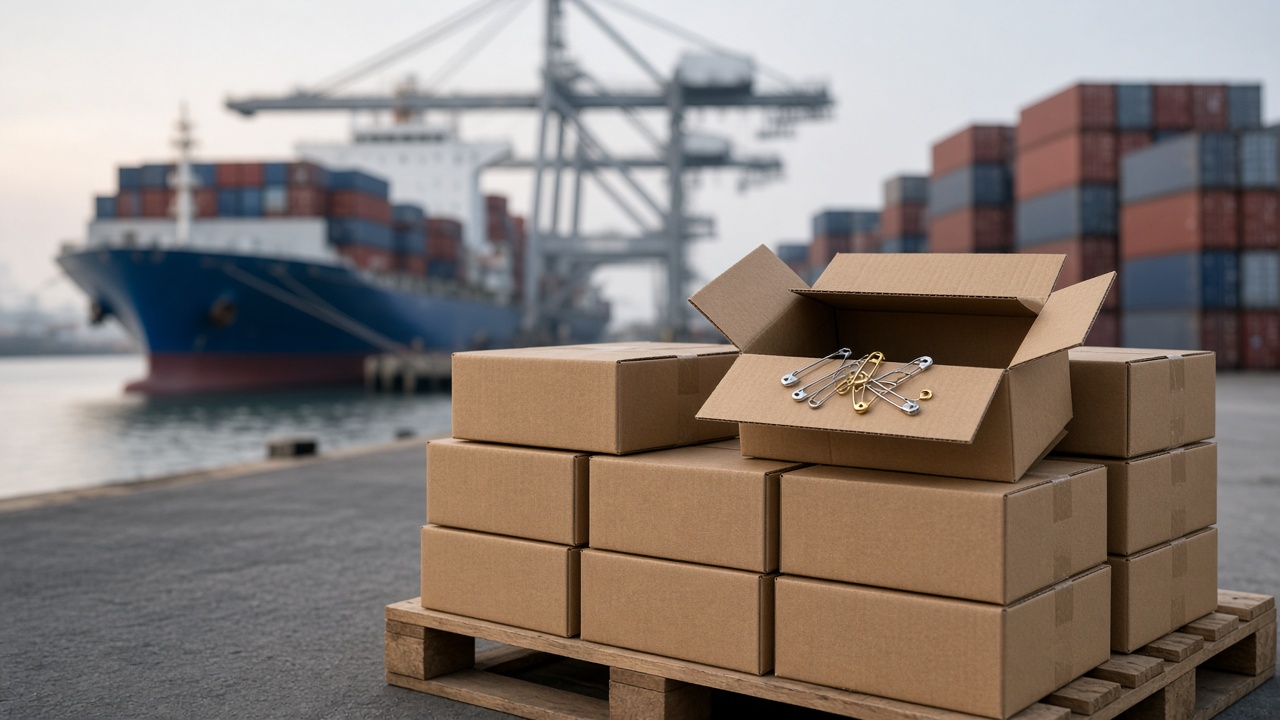
Importing safety pins from India into Australia is straightforward once you know the order of the steps. Most of the work happens before the goods leave the factory: deciding who handles customs, getting the classification right, agreeing the terms of sale and making sure the paperwork matches the cartons. This guide walks a first-time Australian importer, distributor or private-label buyer through the process from first enquiry to goods in the warehouse.
It is a practical overview, not legal or customs advice. Australian import rules, duty and GST treatment, and documentation requirements are set and updated by the Australian Government, so always confirm the current position with the Australian Border Force, the Australian Taxation Office or a licensed customs broker before you ship.
Before You Start: What This Guide Covers
This guide is written for businesses buying safety pins in bulk for resale, retail packing, garment production or industrial use. It assumes you are importing commercial quantities by sea or air, not buying a single parcel for personal use. If you have not yet chosen a supplier, start by comparing quotations and evaluating samples, because the product you approve at sample stage is the product your customs paperwork will describe.
Step 1: Get Your Business Ready to Import
Before you place your first order, make sure your business can receive and clear imported goods. In practice this usually means:
Having an Australian Business Number (ABN) and, where relevant, being registered for GST.
Deciding whether you will lodge customs declarations yourself or appoint a licensed customs broker. Most first-time importers use a broker.
Choosing a freight forwarder, or confirming that your broker can also arrange freight.
Setting up a delivery address, a receiving process and a place to store and inspect stock on arrival.
Quick readiness checklist
Business registration details confirmed.
Customs broker and freight forwarder chosen.
Payment method for duty, GST and charges arranged.
Internal contact named for supplier and broker questions.
Step 2: Confirm the Product Classification
Every imported product is classified under a tariff code. The first digits of these codes follow the international Harmonized System, so your Indian supplier's export code is a useful starting point, but the full Australian classification is set by Australian tariff rules and can differ in the later digits.
Ask your supplier which HS code they will put on the commercial invoice, then ask your customs broker to confirm the correct Australian classification. Give the broker a clear product description, including:
The material, such as steel, stainless steel or brass.
The finish or plating, if any.
How the pins are packed, for example loose bulk, boxed or retail cards.
Whether any other items are packed together with the pins.
Getting this right early avoids delays and corrections later. Do not rely on a code copied from an old invoice or a website without checking it.
Step 3: Understand Duty, GST and Other Charges
When goods are imported into Australia, the importer may need to pay customs duty, GST on imports and other charges, such as processing fees. The amounts depend on the classification, the customs value, the origin of the goods and the rules in force when you import. This guide does not quote rates, because they change and depend on your exact product.
Check whether a preferential rate could apply
Australia has trade agreements with a number of countries, and goods that meet the origin rules of an agreement may qualify for a reduced or nil duty rate. Ask your customs broker whether a preferential rate could apply to safety pins made in India, and what proof of origin is needed. If proof is required, tell your supplier before shipment so the right document can be prepared.
Step 4: Agree Who Does What
The Incoterm on your quotation decides who pays for freight and insurance, and where risk passes from the seller to the buyer. Common options for buyers in Australia include:
FOB (Free On Board): the supplier delivers the goods onto the vessel at an Indian port, and you arrange and pay for the main freight and insurance.
CIF (Cost, Insurance and Freight): the supplier pays freight and minimum insurance to an Australian port, while risk passes once the goods are loaded in India.
EXW (Ex Works): you take responsibility from the supplier's premises, which gives you the most control and the most work.
Whatever term you choose, write it on the purchase order together with the named port or place. Agree in writing who will provide each document, and confirm that customs clearance and payment of duty and GST in Australia are your responsibility, handled through your broker, unless you have agreed otherwise.
Step 5: Get the Paperwork Ready Before Shipping
Your customs broker will need accurate documents to lodge the import declaration. For a typical sea or air shipment of safety pins, ask your supplier for:
A commercial invoice showing the seller, buyer, product description, quantity, unit price, currency, total value and Incoterm.
A packing list showing the number of cartons, contents of each carton and weights.
The bill of lading for sea freight or the air waybill for air freight.
A certificate or declaration of origin, if you plan to claim a preferential rate.
Any product specification or inspection records you have agreed.
Check that the description, quantity and value are the same on every document. Small differences, such as pieces on one document and gross on another, are a common cause of questions at the border.
Packaging and timber
Australia has strict biosecurity rules. If your shipment uses timber pallets, crates or other packing materials, ask your supplier and forwarder how they will meet Australian requirements, and check the current conditions with the Department of Agriculture, Fisheries and Forestry before shipping. Cartons on compliant pallets, or no timber at all, can save time on arrival.
Step 6: Lodge the Declaration and Clear the Goods
When the goods arrive, your customs broker lodges the import declaration, pays or arranges payment of duty, GST and charges, and handles any questions from the Australian Border Force or biosecurity officers. Once the goods are cleared, your forwarder can arrange delivery to your warehouse.
Common causes of delay
Invoice values or descriptions that do not match the packing list.
A vague product description that makes classification difficult.
Missing proof of origin when a preferential rate is claimed.
Packing materials that do not meet biosecurity requirements.
Late payment of duty, GST or charges.
Step 7: Receive, Inspect and Keep Records
Inspect the shipment promptly when it arrives. Check carton counts against the packing list, look for transit damage and compare the pins with your approved sample. Record any problems with dated photographs and tell your supplier and forwarder quickly, within the time limits in your contract.
Keep copies of your import declarations, invoices, transport documents and payment records. Businesses are expected to keep import records for a set period, so check the current record-keeping rules with the ATO or your broker.
Product Safety and Labelling
Safety pins sold to consumers in Australia must meet Australian Consumer Law, and some products, especially those that may be used by or around children, can be covered by additional safety rules. If you are importing retail packs, check the current requirements with official sources such as Product Safety Australia, and agree with your supplier what information will be printed on each pack, including country of origin where required.
Frequently Asked Questions
Do I need a customs broker to import safety pins into Australia?
It is not always mandatory, but most first-time commercial importers use a licensed customs broker because they handle classification, declarations and payments and can advise on current rules.
What tariff code should I use for safety pins?
Start with the HS code your supplier uses on the export invoice, then ask your broker to confirm the full Australian classification for your exact product and packing.
How much duty and GST will I pay on safety pins from India?
It depends on the classification, customs value, origin and the rules in force when you import. Check the current rates with the Australian Border Force or your broker, and ask whether a preferential rate could apply.
Can my Indian supplier handle Australian customs for me?
Your supplier prepares export documents in India. Import clearance in Australia is normally handled by you or your Australian customs broker, unless you have agreed a different arrangement in writing.
Should I order samples before my first bulk import?
Yes. Approving a sample in writing gives you a clear reference for the bulk order, for inspection on arrival and for any claim.
Where can I find the official rules?
Check the Australian Border Force for import and customs requirements, the Australian Taxation Office for GST, the Department of Agriculture, Fisheries and Forestry for biosecurity, and Product Safety Australia for consumer product safety.
Plan Your First Australian Import with Suvik Overseas
Suvik Overseas manufactures and exports steel and brass safety pins from Kolkata, India, for importers, distributors, wholesalers and private-label buyers. Send us your product requirements, preferred packing, Incoterm and destination port in Australia, and request a sample or a quotation. We will prepare clear export documents so your customs broker has what they need.