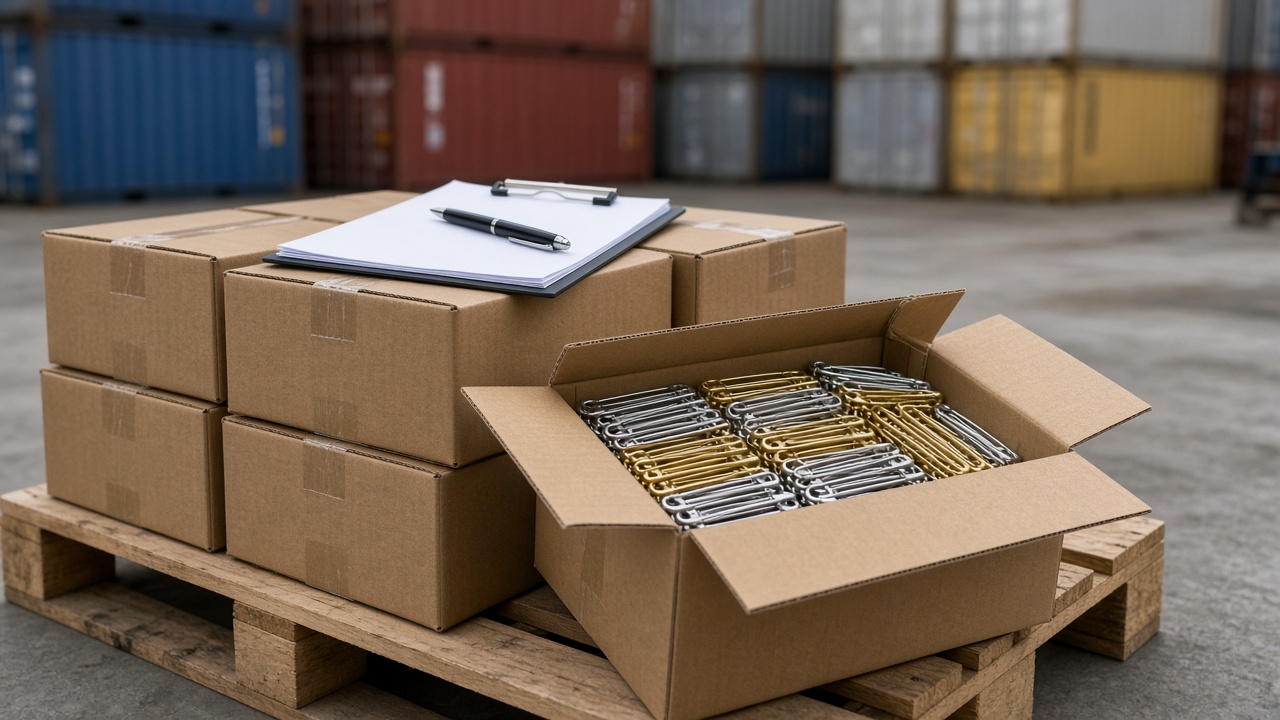
If you run a UK wholesale, distribution or retail business and you are about to place your first order of safety pins with a manufacturer in India, the buying side is only half the job. The other half is getting the goods legally and smoothly into the UK. This step-by-step guide walks a first-time UK importer through that second half, in the order the work usually happens.
It follows the broad shape of the UK government's own guidance on importing goods into the UK, which is published on GOV.UK. It is a practical planning guide, not legal or tax advice. Rules, rates and procedures change, so check every point against official UK government sources on GOV.UK, or with a customs agent or adviser, before you rely on it.
Before You Start: What This Guide Covers
We have already written about choosing a supplier, comparing quotations and planning shipments. This article does not repeat that. It focuses on the import steps a UK business normally works through, from registering to import to keeping records after the goods have arrived.
Getting your business ready to import into the UK.
Finding the right commodity code for safety pins.
Working out what duty and import VAT may apply.
Agreeing who does what with your supplier and forwarder.
Getting the paperwork ready before the goods ship.
Making the customs declaration and clearing the goods.
Paying what is due and keeping the right records.
Step 1: Get Your Business Ready to Import
Businesses importing goods into the UK generally need an EORI number (Economic Operators Registration and Identification) that starts with GB. It identifies your business to customs and appears on your import declarations. GOV.UK explains who needs one and how to apply, and it is worth sorting this out well before your first shipment leaves India.
At the same time, think about VAT. If your business is VAT-registered, the way you account for import VAT can affect your cash flow, and GOV.UK describes the options available. If you are not sure how this applies to you, speak to your accountant before the goods arrive rather than after.
Quick readiness checklist
A GB EORI number in your business name, if required.
Clarity on your VAT position and how you will account for import VAT.
A named person in your business who owns the import process.
A customs agent or freight forwarder lined up, if you are not making declarations yourself.
Step 2: Find the Right Commodity Code
Every product imported into the UK is classified under a commodity code. The code drives the duty rate, any import controls and the statistics recorded for your goods, so getting it right matters. Safety pins are typically classified based on what they are made of and what they are, and steel and brass pins may sit under different codes.
Use the UK Integrated Online Tariff, which is linked from GOV.UK, to search for the code that fits your product. Your Indian supplier will declare an HS code on their export documents, and the first digits of HS codes are shared internationally, but the full UK commodity code is longer and is your responsibility as the importer. If the classification is unclear, GOV.UK explains how to ask for guidance or apply for a formal ruling.
Tips for classifying safety pins
Describe the product precisely: material, finish, whether it is plated, and whether it is sold loose, on cards or in retail packs.
Ask your supplier which HS code they will use on the export invoice, and check it against the UK tariff.
Keep a note of how you reached your classification, in case you need to explain it later.
Step 3: Work Out Duty and Import VAT
Once you have a commodity code, the UK tariff shows the duty rate that applies to goods of that code from India, plus any measures attached to it. Import VAT is normally charged as well. Both are usually calculated on the customs value of the goods, which in most cases is based on the price paid plus certain costs of getting the goods to the UK border, such as freight and insurance.
We do not quote duty rates here because they depend on the exact code, the origin of the goods and the rules in force on the day you import. Check the current figures on the UK tariff and GOV.UK each time, especially for your first order and whenever rules change.
Check whether a preferential rate could apply
Some goods can enter the UK at a reduced rate of duty if they meet the rules of origin under a trade arrangement or preference scheme. Whether anything like this applies to safety pins from India, and what proof of origin you would need, is something to confirm on GOV.UK and with your customs agent. If it does apply, ask your supplier early about the origin statement or documents required, because these are much easier to arrange before shipment.
Step 4: Agree Who Does What
A lot of first-import confusion comes from unclear responsibilities. The Incoterms rule on your purchase order, such as FOB, CIF or DAP, decides where your supplier's job ends and yours begins, including who books freight and who pays which costs. Our separate guides on shipping methods and payment terms cover those choices in more depth.
For UK customs, the key point is that the importer remains responsible for the declaration and for paying what is due, even when an agent submits it. Most first-time importers appoint a customs agent or use their freight forwarder's customs service. Agree in writing:
Who will submit the UK import declaration, and on what basis they act for you.
Who pays duty and import VAT, and how it is paid.
Who books freight from India and who handles delivery from the UK port or airport.
Who will deal with any customs queries or inspections.
Step 5: Get the Paperwork Ready Before Shipping
Customs clearance goes faster when the documents are complete and consistent with each other. Before your supplier ships, agree the documents you need and check drafts if you can. A typical set includes:
Commercial invoice showing the seller, buyer, product description, quantities, unit prices, currency and Incoterms rule.
Packing list with carton counts, contents and weights.
Bill of lading for sea freight or air waybill for air freight.
Any origin documents needed to claim a preferential rate, if one applies.
Your EORI number and the agreed commodity code, shared with your agent.
Make sure the product description on the invoice matches what is actually in the cartons and supports the commodity code you have chosen. Vague descriptions such as "hardware" or "accessories" can cause delays.
Step 6: Make the Declaration and Clear the Goods
Goods arriving in the UK must be declared to customs. Your agent, or you if you have the systems and knowledge, submits the import declaration with the commodity code, customs value, origin and other details. Customs may accept it straight away, ask for documents or choose to examine the goods.
GOV.UK also describes special procedures and reliefs that can delay or reduce duty in certain situations, for example storing goods before they are released into free circulation. Most simple first orders of safety pins will not need these, but if you plan to re-export goods or hold stock in a special warehouse, ask your agent whether any procedure could suit you.
Common causes of delay
Missing or incorrect EORI number.
Commodity code that does not match the invoice description.
Differences between the invoice, packing list and transport document.
Unclear instructions about who is paying duty and VAT.
Step 7: Pay, Receive and Keep Records
Once the declaration is accepted and any duty and import VAT are paid or accounted for, the goods can be released for delivery to your warehouse. When they arrive, check the cartons against the packing list and inspect a sample before putting stock on sale. Our guide to inspecting a bulk safety pin shipment explains a simple way to do this.
Keep copies of your declarations, invoices, transport documents, origin documents and payment records. GOV.UK sets out how long import records must be kept and what VAT-registered businesses need to hold to reclaim import VAT. Good records also make your second and third orders much quicker.
Product Safety and Labelling
Beyond customs, think about the rules that apply when you sell the product in the UK. Safety pins are sharp items, and depending on how and to whom you sell them, general product safety obligations and labelling requirements may apply, including any warnings on retail packs. Check the current requirements on GOV.UK for the way you plan to sell, and agree pack labelling with your supplier before production so the artwork is right first time.
Frequently Asked Questions
Do I need an EORI number to import safety pins into the UK?
Businesses importing goods into the UK generally need a GB EORI number. GOV.UK explains who needs one and how to apply. Apply early so it does not hold up your first shipment.
What commodity code should I use for safety pins?
It depends on the material and exact product. Search the UK Integrated Online Tariff, compare it with the HS code your supplier uses, and ask your customs agent or use the official guidance on GOV.UK if you are unsure.
How much duty will I pay on safety pins from India?
The rate depends on the commodity code, the origin of the goods and the rules in force when you import. Check the current rate on the UK tariff before each order rather than relying on a figure you saw elsewhere.
Can my Indian supplier handle UK customs for me?
Your supplier usually handles export formalities in India. UK import clearance is normally handled by you or a customs agent acting for you, and the importer remains responsible for the declaration. Agree the arrangement in writing.
Should I order samples before my first bulk import?
Yes, it is sensible. Samples let you check the product and confirm the description and classification before committing to a bulk order. Samples can also be subject to import charges, so check how they will be cleared.
Where can I find the official rules?
GOV.UK is the official source for UK import rules, including registering to import, the UK tariff, import VAT, declarations and record keeping. Always check it for the latest position.
Plan Your First UK Import with Suvik Overseas
Suvik Overseas manufactures steel and brass safety pins in Kolkata, India, for importers, distributors, wholesalers and private-label buyers around the world. We can share product details, export documents and packing information to help you and your customs agent prepare for a smooth first import into the UK.
Send us your product requirements, quantities and delivery location, and our export team will prepare a quotation. Contact Suvik Overseas today to start planning your first order.