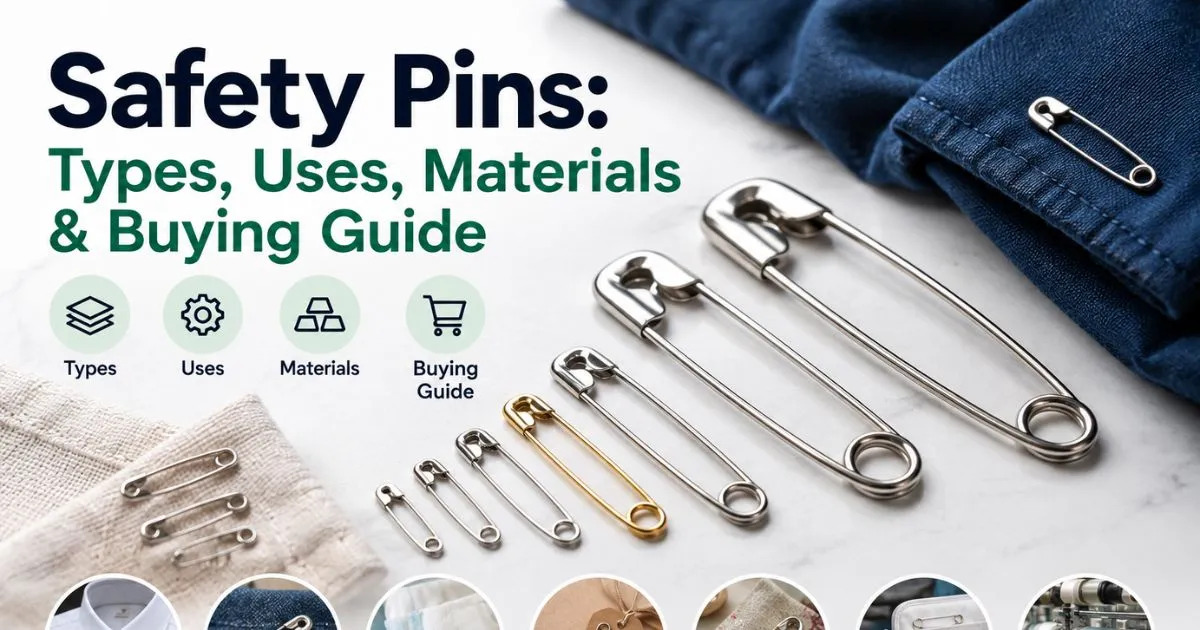
Safety Pins: Types, Uses, Materials, and How to Choose the Right One
Safety pins are small but useful fastening components used in garments, textiles, packaging, crafts, and many industrial applications. Their simple design allows materials to be held together securely while also making them easy to open and reuse.
For businesses purchasing safety pins in bulk, choosing the right size, material, finish, and strength is important. The right specification can improve product quality, durability, and manufacturing efficiency.
What Is a Safety Pin?
A safety pin is a metal fastening device made from a wire or strip that is formed into a loop and fitted with a clasp or guard at one end. The pointed end passes through the material and locks into the protective clasp.
Unlike an ordinary pin, the point remains covered when the safety pin is closed. This makes it safer to handle and reduces the chance of accidental contact with the sharp end.
Safety pins are available in different sizes, materials, finishes, and designs depending on their intended application.
Common Types of Safety Pins
1. Standard Safety Pins
Standard safety pins are commonly used for garments, fabrics, tailoring, and general household applications.
They are available in different sizes to accommodate different fabric thicknesses and fastening requirements.
2. Heavy-Duty Safety Pins
Heavy-duty safety pins are designed for applications that require greater strength and durability.
They can be used with thicker fabrics, industrial textiles, packaging materials, and other applications where a stronger fastening solution is required.
3. Garment Safety Pins
Garment safety pins are widely used in clothing manufacturing, tailoring, textile production, and temporary garment fastening.
Manufacturers may select different sizes and finishes depending on the type of fabric and production process.
4. Industrial Safety Pins
Industrial safety pins are designed for applications where consistent dimensions, material quality, and mechanical performance are important.
They may be used in manufacturing, packaging, textile processing, and other industrial environments.
Materials Used for Safety Pins
The material used to manufacture a safety pin affects its strength, durability, corrosion resistance, and appearance.
Common materials include:
Carbon Steel
Carbon steel is widely used where strength and cost-effectiveness are important. Different carbon levels can provide different mechanical properties.
Stainless Steel
Stainless steel offers better corrosion resistance and is suitable for applications where exposure to moisture or demanding environments is a concern.
Other Metal Options
Depending on the application and customer requirements, safety pins may also be produced using other metal specifications or surface finishes.
For bulk orders, buyers should confirm the required material grade and specifications with the manufacturer or supplier.
Common Safety Pin Sizes
Safety pins are available in different sizes.
The appropriate size depends on:
Material thickness
Required holding strength
Application
Fabric type
Product design
Manufacturing requirements
Smaller pins are generally suitable for lightweight materials, while larger or heavier pins can be used for thicker materials and applications requiring greater holding capacity.
For industrial purchasing, it is better to specify the required dimensions rather than selecting a product based only on a general size description.
Where Are Safety Pins Used?
Safety pins have applications across several industries.
Garment and Textile Industry
Safety pins are commonly used in garment production, tailoring, textile handling, temporary fastening, and packaging.
Packaging
Some packaging applications use safety pins or similar fastening components to secure materials during handling and transportation.
Industrial Manufacturing
Manufacturers may use specialized pins as fastening or temporary holding components depending on the production process.
Crafts and General Applications
Safety pins are also used for sewing, crafts, fabric work, and various everyday fastening requirements.
How to Choose the Right Safety Pin
For B2B purchasing, several factors should be considered before selecting a safety pin.
1. Material
Choose the material based on the required strength, durability, corrosion resistance, and application environment.
2. Size
Select a size appropriate for the material thickness and required fastening capacity.
3. Wire or Strip Thickness
The thickness of the material affects the overall strength and stiffness of the pin.
4. Surface Finish
The required finish may depend on appearance, corrosion resistance, and the application.
5. Quantity
For manufacturing and commercial requirements, determine the expected monthly or annual quantity before placing an order.
6. Quality Requirements
For industrial applications, buyers should clearly communicate dimensional tolerances, material requirements, finish, packaging, and inspection requirements.
Safety Pins for Bulk and Industrial Requirements
Businesses purchasing safety pins in large quantities should work with a supplier capable of maintaining consistent quality across production batches.
Important factors include:
Consistent dimensions
Reliable material quality
Proper forming
Secure clasp performance
Suitable surface finish
Quality inspection
Consistent packaging
Bulk production capacity
For international buyers, packaging, labeling, documentation, and shipping requirements should also be discussed before placing an order.
Why Material Quality Matters
The performance of a safety pin depends heavily on the quality and properties of its raw material.
A suitable material should provide the required combination of:
Strength
Flexibility
Durability
Corrosion resistance
Formability
For manufacturers, using the correct material specification can help maintain consistent production quality and reduce failures during use.
Frequently Asked Questions
What are safety pins used for?
Safety pins are used for fastening fabrics, garments, textiles, packaging materials, and various industrial applications.
Which material is commonly used for safety pins?
Carbon steel and stainless steel are common material choices. The appropriate material depends on the intended application and required properties.
Are safety pins available in different sizes?
Yes. Safety pins are manufactured in different sizes to suit lightweight fabrics, heavier materials, garment applications, and industrial requirements.
Can safety pins be purchased in bulk?
Yes. Manufacturers and B2B suppliers can provide safety pins in bulk quantities based on required specifications, packaging, and application.
How do I choose a safety pin for industrial use?
Consider the required material, dimensions, thickness, strength, surface finish, application, quantity, and quality requirements before selecting a product.
Conclusion
Safety pins may be simple components, but the correct material, size, finish, and manufacturing quality are important for reliable performance. For garment manufacturers, textile businesses, industrial buyers, and distributors, selecting safety pins according to the actual application can help ensure consistent results.
When purchasing in bulk, buyers should provide clear technical specifications and work with a supplier that can maintain consistent quality, dimensions, and production capacity.