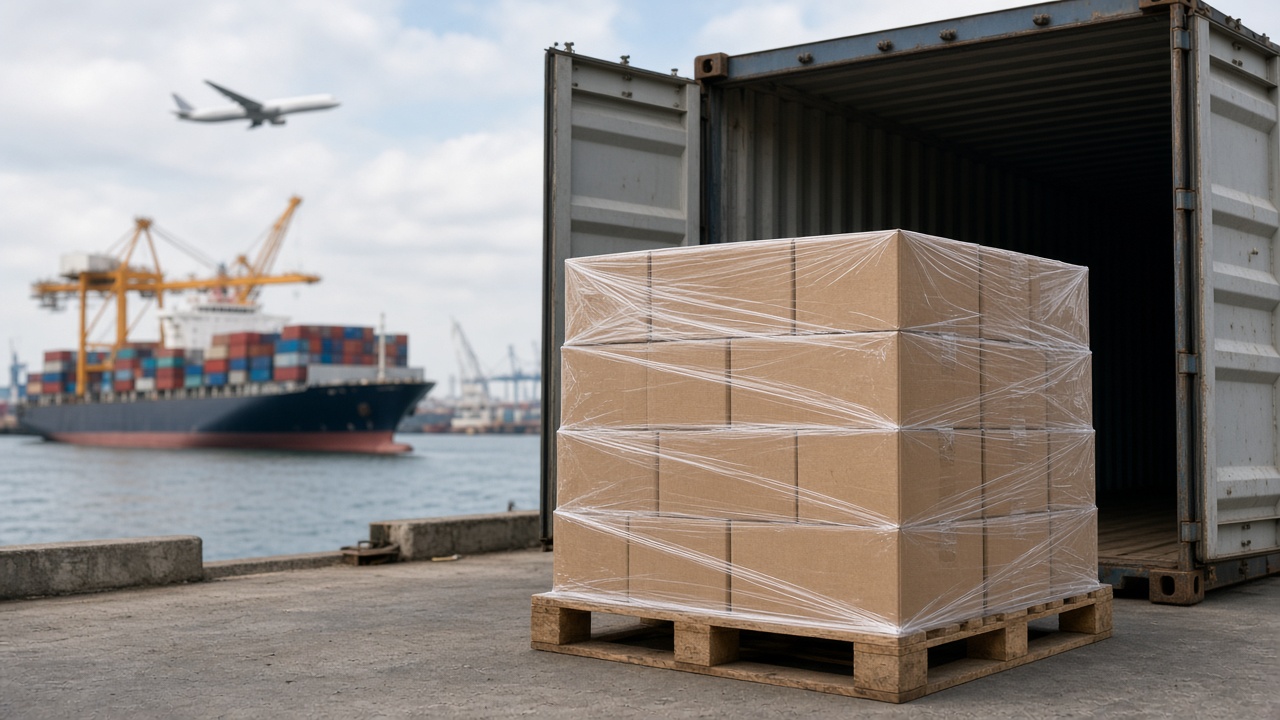
Once you have agreed on price, quantity and packing for a bulk safety pin order, one practical question decides a lot of what happens next: how will the goods actually travel from India to your warehouse? The answer affects your landed cost, how soon the stock arrives, how much handling the cartons go through and how much paperwork your team or your forwarder has to manage.
This guide is for importers, distributors, wholesalers and private-label buyers outside India who buy safety pins in volume. It explains the main ways to ship, LCL sea freight, FCL sea freight, air freight and express courier, and gives you a simple way to choose between them for each order.
The Four Common Ways to Ship Safety Pins from India
Most bulk shipments of small hardware such as safety pins move in one of four ways. Each has a place, and many buyers use more than one over the course of a year.
LCL sea freight (less than container load): your cartons share a container with other shippers' goods.
FCL sea freight (full container load): you book a whole container for your goods.
Air freight: cartons travel as cargo on a plane, booked through a forwarder or airline agent.
Express courier: door-to-door services suited to samples and small, urgent consignments.
Safety pins are compact and dense, so a large number of pieces fits into a modest volume. That makes the choice less about whether the goods fit and more about cost per carton, transit time and risk.
LCL Sea Freight: Shared Container Space
With LCL, your cartons are consolidated with other cargo at a container freight station, shipped in a shared container, and then separated again at the destination before delivery. You usually pay according to the volume or weight of your shipment rather than for a whole container.
When LCL makes sense
Your order is too large for courier but nowhere near enough to fill a container.
You are placing a first or trial order and want sea freight costs without committing to a full container.
You are not under strong time pressure and can plan stock in advance.
What to watch with LCL
Consolidation and deconsolidation add steps, so transit can take longer than the sailing time alone suggests.
Cartons are handled more often, so strong export cartons, good strapping and clear shipping marks matter.
Destination charges for handling and delivery can be a noticeable share of the total on small shipments. Ask your forwarder for a full estimate, not just the ocean freight rate.
FCL Sea Freight: A Container of Your Own
With FCL, the container is booked for your goods alone. It is typically loaded and sealed at origin and opened only when it reaches you, or when customs or another authority needs to inspect it.
When FCL makes sense
You are buying in large volumes, or combining safety pins with other products from the same supplier or region.
You want less handling of your cartons during the journey.
You are planning regular replenishment and want a predictable shipping pattern.
What to watch with FCL
You pay for the container whether it is full or not, so it only becomes cost effective at higher volumes.
Free time at the destination port and terminal is limited. If the container is not cleared and returned on time, charges can apply, so have customs paperwork ready before arrival.
Ask the supplier how cartons will be loaded and secured inside the container, and request loading photographs.
Air Freight: Faster, at a Higher Cost per Kilo
Air freight moves goods much faster than sea freight, but it is charged by chargeable weight, which takes both actual weight and volume into account. Because safety pins are heavy for their size, the cost per carton by air can rise quickly.
When air freight makes sense
You are running low on stock and a sea shipment would arrive too late.
You need a part of a larger order quickly, for example a retail launch, while the rest follows by sea.
The shipment value is high relative to its weight, or the cost of being out of stock is greater than the extra freight cost.
A split shipment is a common middle path: a smaller quantity goes by air to cover immediate demand, and the main quantity follows by sea. If you plan to do this, tell your supplier when you place the order so production, packing and documents can be arranged for two consignments.
Express Courier: Best for Samples and Small Lots
Courier services collect from the supplier and deliver to your door, often handling much of the transport arrangement for you. They are well suited to:
Pre-production samples and approval samples.
Packaging proofs and printed private-label artwork.
Very small replenishment orders where speed matters more than unit cost.
Courier pricing usually rises steeply with weight, so it rarely suits bulk orders. Also check how duties and taxes will be billed for courier deliveries in your country, because the process can differ from a formal freight import.
How Incoterms Affect Who Books the Shipment
The Incoterm in your quotation decides who arranges and pays for each part of the journey. Under terms such as FOB, the buyer usually appoints the forwarder and pays the main freight. Under terms such as CIF, the seller arranges the main carriage and insurance to the named destination port, while the buyer handles costs after arrival. Terms such as DAP and DDP move more responsibility to the seller.
Whichever term you use, make sure the quotation names both the Incoterm and the place, and that everyone is working from the current version of the Incoterms rules. Comparing an FOB price with a CIF price without adjusting for freight is one of the most common mistakes buyers make.
A Simple Way to Choose for Each Order
Work through these questions before you confirm the shipping method:
What is the volume and weight? Ask the supplier for the number of cartons, carton dimensions and gross weight. Your forwarder needs these figures to quote properly.
When do you need the stock? Work back from your required in-warehouse date, allowing for production, export clearance, transit, import clearance and inland delivery.
What is the full landed cost? Compare door-to-door estimates that include origin charges, freight, insurance, destination charges, duties, taxes and delivery, not only the freight rate.
How much handling can the packing take? Retail and private-label packs may need extra protection if they travel LCL or by air.
Who is booking? Confirm under your Incoterm whether you or the supplier appoints the forwarder.
Prepare These Details Before Booking
Delays often come from missing information rather than from the ship or plane. Before booking, make sure you and your forwarder have:
The confirmed packing list with carton count, dimensions and gross and net weights.
A clear product description for the commercial invoice and customs entry. Check the correct tariff classification with your customs broker or the official customs authority in your country.
Shipping marks and carton numbering agreed with the supplier.
The consignee and notify party details, exactly as they should appear on the transport document.
Any import requirements specific to your country, confirmed with an official source or a licensed customs broker.
A decision on cargo insurance, and who arranges it under your Incoterm.
Frequently Asked Questions
Is LCL or FCL better for a first safety pin order?
For many first or trial orders, LCL is the practical choice because the quantity is usually too small to justify a full container. As volumes grow, or when you combine products into one shipment, compare an FCL quote against LCL to see where it becomes better value for your route.
Can I ship safety pins by air?
Yes, safety pins can travel as air cargo, but because they are dense, air freight costs per carton can be high. Many buyers use air only for urgent quantities or samples and send the main order by sea.
Who should book the freight, the buyer or the supplier?
That depends on the Incoterm you agree. Under FOB the buyer usually books the main freight through their own forwarder, while under CIF the seller arranges carriage to the destination port. Choose the arrangement that gives you the best mix of cost, control and convenience, and write it into the purchase order.
How can I reduce the risk of damage in transit?
Agree on strong export cartons, a sensible carton weight, inner packing that stops boxes moving, and clear shipping marks. For LCL and air shipments, where cartons are handled more, ask for palletising or extra wrapping where it makes sense, and inspect the goods promptly when they arrive.
Where can I find the import duty for safety pins in my country?
Duty and tax depend on your country, the product's tariff classification and its origin. Check your national customs authority's official tariff or ask a licensed customs broker. A supplier can help with the product description but cannot set your duty.
Plan Your Next Shipment with Suvik Overseas
If you are planning a bulk order of steel or brass safety pins, or a private-label or OEM order for export, send us your quantity, packing style, preferred Incoterm and destination port or city. We can share carton details for your forwarder and quote on the terms that suit your business. Request a quotation or samples today to get started.