
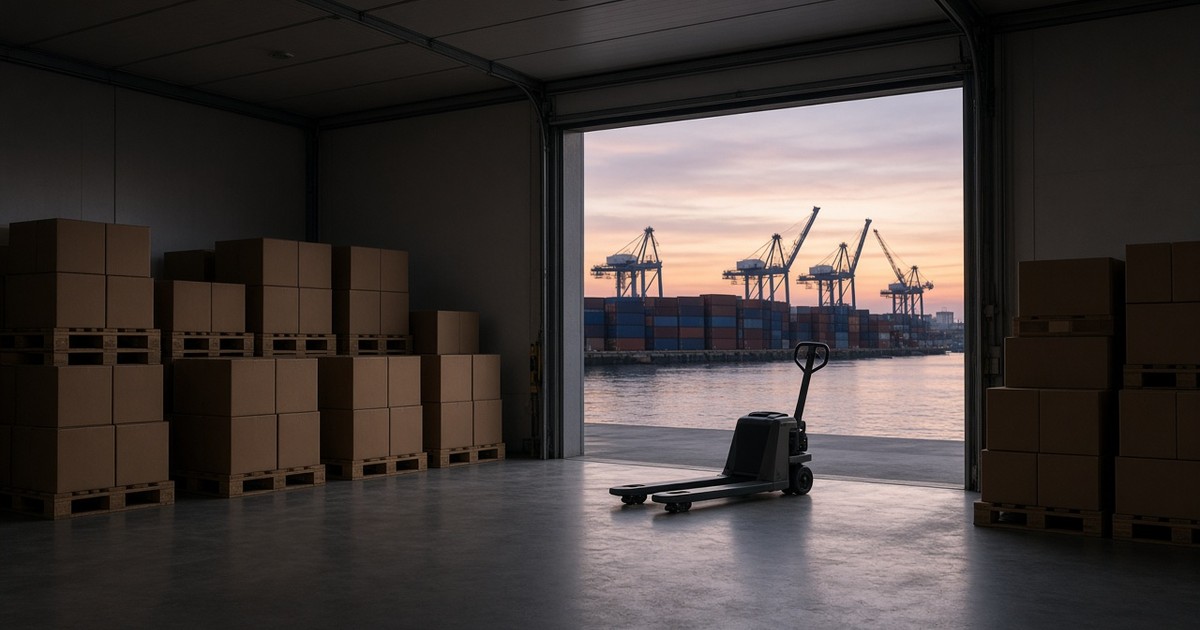
Most of our import guides for Southeast Asia are about claiming a lower duty rate. Singapore is the odd one out. It charges customs duty on only four groups of goods, and safety pins are not one of them, so a Singapore distributor buying from an Indian factory has no duty to reduce. The questions that matter are different: which permit, how the 9% GST works, what happens if the goods only pass through Singapore, and what paperwork keeps the Indian origin of the pins intact if you re-export them to a neighbouring market.
This guide is for Singapore distributors, wholesalers, trading companies and regional re-exporters who buy steel safety pins by the carton from India. It sits alongside our guides for Vietnam, Thailand and the Philippines and Malaysia, which cover duty schedules and preference claims in those markets. We do not repeat them here.
This is general buyer information, not customs, tax or legal advice. Rules were read on Singapore Customs, IRAS, Enterprise Singapore, the Maritime and Port Authority of Singapore (MPA) and Export Inspection Council pages on 28 November 2026 and can change. Confirm the permit type, GST treatment and origin documents for your own shipment with a licensed declaring agent, Singapore Customs or IRAS before you order.
The short answer
Duty: Singapore Customs says there are four categories of dutiable goods: intoxicating liquors, tobacco products, motor vehicles, and petroleum products and biodiesel blends. Safety pins are not in any of them. Goods that are not dutiable still bear GST.
GST: the rate has been 9% since 1 January 2024. Import GST is charged on the taxable value, which includes the cost, insurance and freight (CIF), any customs duty payable, and other incidental charges.
Permit: to import goods into Singapore you must submit a Customs Import Permit through TradeNet. You need a Unique Entity Number (UEN), an activated Customs account and either a declaring agent or your own TradeNet access.
Origin papers are not needed to enter Singapore, because there is no duty to reduce. They matter if you re-export the pins to another ASEAN country or India, where the ASEAN–India (AIFTA) preference may apply.
Goods passing through: transhipment of goods through Singapore is not subject to duty or GST, but needs the right permit, arranged by a transhipment agent.
A major hub: the MPA reports a record 44.66 million TEU of container throughput in 2025 and links to more than 600 ports worldwide.
First step: send your sizes in mm, pack format, quantity, whether the pins stay in Singapore or move on, and the destination country through the enquiry form.
Why Singapore is different from other Southeast Asian markets
Our other country guides are built around a tariff line: the base rate, the AIFTA rate, the certificate you need to claim it. In Singapore that chain stops at the first step. Singapore Customs' duties overview says goods that are not subject to customs or excise duty are non-dutiable, although GST may still apply unless exempted. Its page on claiming preferential tariff treatment explains that Singapore's free trade agreements give reduced or zero customs duty on certain dutiable goods, and the examples it lists are liquors.
The India–Singapore Comprehensive Economic Cooperation Agreement (CECA) entered into force on 1 August 2005, according to Enterprise Singapore, and its Annex 2B says Singapore shall eliminate customs duties on all originating goods of India from that date. For safety pins the practical position is simpler still: there is no customs duty to eliminate.
Two consequences follow. First, a Singapore importer who buys safety pins for local sale does not need a CECA or AIFTA certificate of origin to avoid duty. Second, origin still matters once the pins leave Singapore, because the next country may charge duty and offer a preference for Indian-origin goods. That is the part of the process this guide spends most time on.
Step 1: Set up to import
Singapore Customs sets out the steps on its page on obtaining a Customs Import Permit:
Register for a UEN with the Accounting and Corporate Regulatory Authority (ACRA) or the relevant UEN issuing agency.
Activate your Customs account with Singapore Customs. This is required before any import permit application can be submitted.
Choose how you declare. Either appoint a declaring agent to apply for permits on your behalf, or register as a declaring agent yourself and apply for a TradeNet user ID.
All import permit applications go through TradeNet, using approved software or the Government Front-End application. Once the permit is approved, you follow its conditions for cargo clearance and payment of duties and GST where applicable.
For a first order most distributors use a freight forwarder or a declaring agent. Give the agent the importer's UEN, the commercial invoice, the packing list and the bill of lading or air waybill, and make sure the product description and quantity match your purchase order. Importing, exporting or transhipping goods without a permit is an offence: Singapore Customs lists a fine of up to S$100,000 or three times the value of the goods, whichever is greater, or imprisonment of up to two years, or both, for a first conviction.
Step 2: Plan for GST
Singapore's import GST is a cash-flow item for a distributor rather than a cost, if you are GST-registered and the goods are for your taxable sales. The IRAS guide on imports (twelfth edition, published 30 January 2026) sets it out:
The importer takes up the import permit and pays GST on import, unless the goods qualify for relief.
GST is charged on the taxable value: CIF value plus any customs duty payable, commission and other incidental charges.
The rate is 9%, in force since 1 January 2024.
A business approved under the Import GST Deferment Scheme (IGDS) can defer payment of import GST until its GST return for the period, and can claim the import GST as input tax in the same period if the input tax conditions are met.
Registration with IRAS is compulsory once taxable turnover is more than S$1 million, either at the end of a calendar year or as expected over the next 12 months.
A simple illustration with a made-up value: if the CIF value of an order is S$12,000 and there is no customs duty, the GST at 9% is S$1,080. This is arithmetic from the IRAS formula, not a price or a quote. Ask your accountant how import GST will sit in your cash flow, and whether IGDS suits you.
One more point for sample orders. Singapore Customs' clearance page says that GST relief and a permit waiver apply only to non-controlled, non-dutiable air imports with a total CIF value of S$400 or less, cleared through the Changi Airfreight Centre by freight forwarders or handling agents. Bigger or sea-freight samples need a permit.
Step 3: Documents
For containerised sea cargo, Singapore Customs says you declare the container number and shipper seal number when applying for the permit, and you do not need to present the permit and supporting documents at the inward checkpoint. For air or land cargo you must present the permit copy, commercial invoice, packing list and air waybill or consignment note (not applicable to land imports). Conventional and hand-carried cargo needs the goods, a printed permit and the supporting documents.
Suvik Overseas' shipping policy lists the documents it prepares for export: commercial invoice, packing list, bill of lading or airway bill, certificate of origin, GST/IGST documents and any country-specific certificates as required. Our guide to export documents explains each one, and the certificate of origin guide explains which preferential certificate belongs to which agreement.
Three journeys for goods from India
Before you write the purchase order, decide which of three journeys the cartons will take. Each has a different permit and a different origin question.
Journey A: Import for sale in Singapore
The goods are cleared under a Customs Import Permit and GST is paid at import (or deferred under IGDS). No duty is payable. No certificate of origin is needed to avoid duty. This is the route for a distributor that sells to Singapore shops, hardware stores and tailoring suppliers.
Journey B: Transhipment through Singapore
The goods arrive on one vessel and leave on another without entering Singapore's domestic market, usually under a through bill of lading. Singapore Customs says transhipment of all goods is not subject to duty or GST. A transhipment agent, which can be a freight forwarder, NVOCC or shipping agent, must obtain a Customs transhipment permit before the movement. Goods may be stored in a Free Trade Zone (FTZ) pending transhipment with duty or GST suspended while they are inside it.
Where containerised cargo moves between gateways, Singapore Customs says the containers are sealed at the entry checkpoint and must reach the exit checkpoint for clearance within 24 hours. Its permit types differ by move: for example, TTI covers goods on a through bill of lading moving from one FTZ to another or between an FTZ and a land checkpoint. Your agent chooses the correct one.
In this journey the Indian origin documents travel with the goods and are used by the final importing country. Nothing changes in Singapore.
Journey C: Import into Singapore, then re-export
Here you buy the goods, bring them into Singapore under your own name, hold stock, and sell onward to customers in other countries. This is the regional distributor model. The origin question is the one that needs care.
Keeping Indian origin when you re-export
The ASEAN–India agreement (AIFTA) covers India and the ten ASEAN member states, Singapore among them. The origin rules in the agreement text, as published by India's Export Inspection Council, say consignments are treated as direct when products are transported passing through the territory of any other AIFTA Party. Rule 8, "Direct Consignment", lists that as case (a). Since Singapore is itself an AIFTA Party, goods of Indian origin that pass through Singapore to another AIFTA country can still be treated as consigned directly. On that rule, the Form AI that India issued to the first exporter should still support the claim in the final country, subject to the rest of the rules. Confirm with your agent and with the final importer's customs authority: the AIFTA text has more conditions than we summarise here.
If you import the goods into Singapore and re-export part of them, there is a second route: a back-to-back Form AI. Article 11 of the agreement's Operational Certification Procedures lets the issuing authority of the intermediate Party issue a back-to-back certificate when the exporter applies while the product is passing through that Party's territory, provided, among other conditions, that:
a valid original certificate from the first exporting Party is presented to the intermediate authority;
the importer in the intermediate Party and the exporter applying for the back-to-back certificate are the same;
the back-to-back certificate has the same end date as the original;
the goods have not undergone further processing, except repacking and logistics activities consistent with the direct consignment rule; and
the goods remain in the intermediate Party's customs territory, including its free trade zones and bonded areas approved by customs, and do not enter trade or consumption there.
Singapore Customs has its own page on how to apply for a back-to-back preferential certificate of origin. It says the certificate is issued for re-export based on the preferential certificate issued by the first exporting party, and sets out these general conditions: the agreement contains a back-to-back provision; the first exporting country, Singapore and the final importing country are all Parties to the same agreement; the goods are imported into Singapore from the first exporting country and re-exported to the final importing country; the import is covered by a preferential certificate from the first exporting country; and the goods undergo no further processing in Singapore. For AIFTA the page lists the back-to-back Form AI as certificate type 28, requires the original Form AI, the exporter's invoice, a working sheet for partial consignments and, for this type, an import permit, and says you can attach the documents with the export permit and certificate application through TradeNet.
The key point for a distributor: if you intend to sell goods onward under a back-to-back certificate, those cartons must not be sold into the Singapore market first. Article 11 allows the re-exported goods to be all or part of the original consignment, and Singapore Customs asks for a working sheet for partial consignments, so cartons for local sale can be separated from cartons for re-export. Arrange the first Form AI and the back-to-back certificate before the goods leave. If you cannot do this, the final importer simply pays whatever duty its own tariff charges. Our country guides show what that may mean in Vietnam, Thailand, and the Philippines and Malaysia. This guide does not state the rates of those countries.
For the parallel story in another hub, see our guide to re-exporting safety pins from Dubai free zones.
What this means for your purchase order
Name the journey in the order. A line such as "goods for import and sale in Singapore" is one thing. "Goods for transhipment through Singapore to [country], with a Form AI" is another. Ask for:
the incoterm and delivery point (Suvik typically ships FOB Kolkata or CIF port of destination, with DDP on request, from Kolkata sea port or Kolkata airport);
a certificate of origin in the format your onward buyer needs, requested before dispatch;
carton marks and a packing list your agent can match to the permit; and
a clear note of who the importer of record is in Singapore.
Suvik's shipping policy says all import duties, taxes and customs clearance charges at the destination are the buyer's responsibility.
Lead times and the hub
The shipping policy gives ready-stock orders as dispatched within 3 to 5 business days of payment confirmation, made-to-order and custom packaging as 10 to 21 business days, and large export consignments (FCL or LCL) as 15 to 30 business days including stuffing and documentation, with a peak production season from October to January. This guide gives no transit time to Singapore; ask your forwarder.
Singapore's role as a hub is documented by its port authority. The MPA's media release on 2025 results reports 44.66 million TEU of container throughput in 2025, up 8.6% on 2024. Its page on global connectivity describes Singapore as the focal point for some 200 shipping lines with links to more than 600 ports worldwide. Whether that suits your cargo depends on your route and your buyers.
What to order
A regional distributor usually wants a few reliable sizes in pack formats that suit both trade counters and shops. The product pages for Suvik's steel lines list nickel-plated mild steel pins, such as:
AROMI Size 0, 20 pouch: 30 mm, 0.70 mm wire, 1,000 pieces per box in 20 pouches of 50, 100 boxes per carton.
SALASAR Size 0, 10 pouch: 30 mm, 0.70 mm wire, 1,000 pieces per box in 10 pouches of 100, 100 boxes per carton.
AROMI Assorted, 50 pouch: sizes 0, 1 and 2 (30, 35 and 40 mm), 1,000 pieces per box in 50 pouches of 20, 75 boxes per carton.
MAJOR Size 2, 20 pouch: 40 mm, 1,000 pieces per box in 20 pouches of 50.
See the full steel safety pin range and our bulk safety pin distributor page. Use the sample evaluation checklist before you commit, and how to ship bulk safety pins by LCL, FCL or air when choosing the mode.
What this guide did not check
Whether any Singapore control, licence or labelling rule applies to safety pins: Singapore Customs has separate pages on controlled and prohibited imports, which we did not review. Ask your agent.
The exact HS code Singapore Customs would expect on your permit. Use the 6-digit international heading 7319.40 as a starting point, and let your agent confirm the full code.
Transit times and freight rates to Singapore.
Which preferential rate, if any, your customer's country will give your goods. Each country's own tariff and rules apply.
How GST will affect your accounts. Ask IRAS or your accountant.
Frequently asked questions
Do I pay import duty on safety pins in Singapore? Singapore Customs lists four categories of dutiable goods, and safety pins are not among them. GST at 9% still applies to imports for local consumption.
Do I need a certificate of origin to import into Singapore? Not to avoid duty, because none is charged. You may need one to support onward sales in another country that charges duty.
Can I re-export Indian-origin pins and keep the AIFTA preference? It can be possible, either because goods consigned through another AIFTA Party count as direct, or through a back-to-back Form AI issued by Singapore Customs, subject to the conditions above. Confirm with your declaring agent.
What is the MOQ? MOQ is flexible and depends on size, finish and packaging. Tell us your quantity and we confirm.
Next step
If you are planning to supply Singapore or the region with steel safety pins, send your sizes in mm, pack format, quantity, journey (local sale, transhipment or re-export), Incoterm and destination through the enquiry form or the contact page, and tell us which origin certificate your onward buyer needs. Suvik Overseas manufactures safety pins and dress hooks at its factory in Howrah, West Bengal, India, and exports worldwide.
Sources
Singapore Customs, Duties and Dutiable Goods Overview (last updated 9 March 2026): four dutiable categories; non-dutiable goods may still bear GST. Read 28 November 2026.
Singapore Customs, Import Procedures Overview, Obtain a Customs Import Permit and Documents for Clearance of Goods: UEN, Customs account, TradeNet, clearance documents, S$400 air GST relief.
Singapore Customs, Claiming Preferential Tariff Treatment for Dutiable Imports: preferential treatment applies to dutiable goods.
Singapore Customs, Transhipment Procedures Overview and Types of Transhipment and Movement Permits: no duty or GST on transhipment, transhipment agent and permit, 24-hour exit rule, FTZ storage, permit types, penalties.
Singapore Customs, How to apply for a Back to Back Preferential Certificate of Origin (last updated 24 February 2026): conditions, certificate type 28 for AIFTA, supporting documents.
IRAS, e-Tax Guide: GST Guide on Imports (twelfth edition, 30 January 2026): 9% from 1 January 2024, taxable value, IGDS, and IRAS, Do I need to register for GST: the S$1 million threshold.
Enterprise Singapore, India–Singapore CECA (entry into force 1 August 2005) and CECA Annex 2B, Schedule of Singapore: customs duties eliminated on all originating goods of India.
Export Inspection Council of India, ASEAN–India Trade in Goods Agreement text: Rule 8 (Direct Consignment) and Article 11 of the Operational Certification Procedures (back-to-back certificate). This copy may pre-date later amendments.
Maritime and Port Authority of Singapore, Singapore posts record port performance in 2025 and Global Connectivity: 44.66 million TEU in 2025; more than 600 ports.
Suvik Overseas, Shipping & Delivery Policy and the product pages linked above. Read 28 November 2026.