
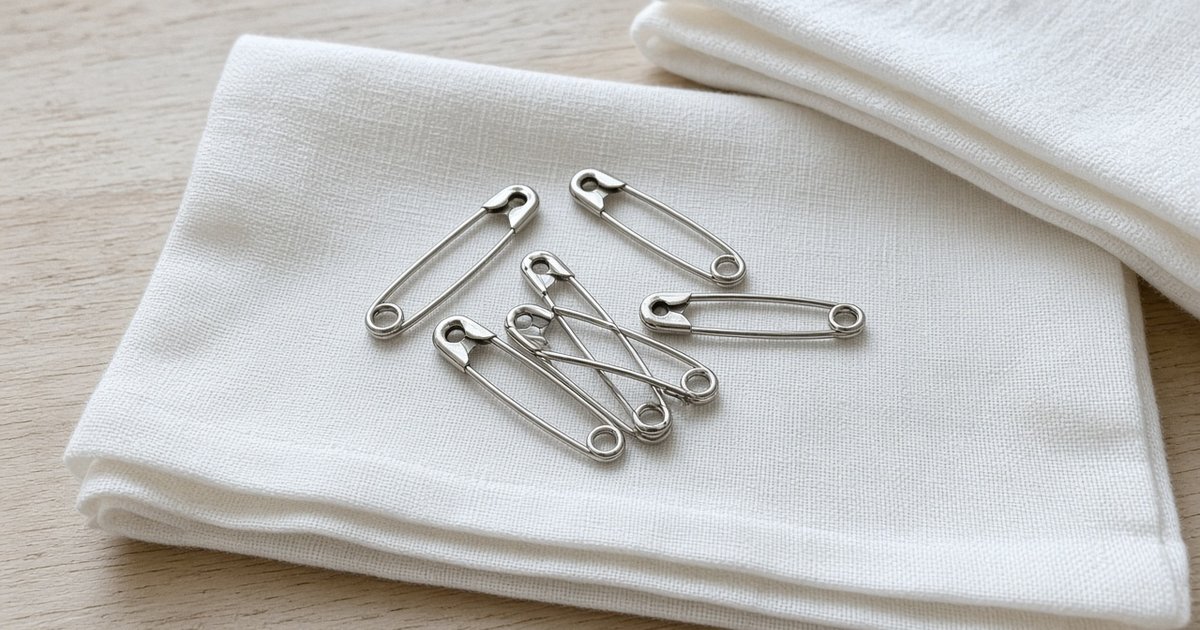
The finish on a safety pin is the surface you see and touch: the coating on the steel wire, and how evenly it has been applied. It affects whether the pin looks consistent in a retail pack, whether it rusts in storage or in a humid workroom, and whether it snags fabric. It is also one of the easiest things to leave vague in an enquiry, which is how a sample and a production lot can end up looking different.
This guide is for distributors, wholesalers, garment buyers and brands who buy steel safety pins in bulk. It explains what to ask about a nickel-plated mild steel finish, how to think about rust resistance, and what to check on a sample before you order. It is written as buyer questions, not as a catalogue of finishes. Suvik Overseas describes its standard pins as nickel-plated mild steel; this article does not claim any other finish.
This is general buyer information, not laboratory or legal advice. It does not report test results, coating thicknesses or guaranteed rust-free periods, because no such figures are being offered here. Confirm any test method you need with your own quality team or a test house. Product, packing and shipping details are from Suvik Overseas product pages and its published shipping policy, checked on 26 November 2026.
The short answer
Say "nickel-plated mild steel" and the size in millimetres, not only a size number or the word "standard finish".
Ask how the factory will keep the finish consistent from the approved sample to the production lot, and how cartons will identify the batch.
On the sample, check that the plating is even, without flaking, bare patches or rough edges, that the head covers the point, and that the pin does not snag the fabric you actually use.
Rust resistance is a performance question, not a slogan. Ask what the supplier can tell you about storage and packing, and, if you need a formal test, what method you want run and by whom. Do not treat a pin as rust-proof.
Packing matters. Pins should arrive in pouches or inner boxes inside a sound outer carton, so the finish is not scuffed in transit. Custom packs are available; confirm the format before production.
Write the finish into the purchase order and keep a retained sample of the approved lot.
First step: send your sizes in mm, finish (nickel-plated mild steel, unless you and the team agree another wording), pack format, quantity and destination through the enquiry form, and ask for samples.
What a finish is on a steel safety pin
A common industrial safety pin starts as steel wire, is formed into the bow, the point and the cap, and is then given a metal plating. On Suvik's standard lines the material is mild steel and the plating is nickel. The plating is there to give a bright, even surface and to help the steel resist rust in normal handling and storage. Our guide to how safety pins are made describes the path from wire to packed carton.
Nickel plating is not the same thing as a promise that a pin will never rust. A plated pin can still rust if the coating is thin, damaged or incomplete, or if the pins are stored wet, in open cartons, or in a very humid place for a long time. The right question is not "is this rust-proof?" It is "is this the finish I approved, is it consistent, and is it packed and stored so that it stays that way until I use it?"
This article does not describe other base metals or decorative coatings, and it does not add product types beyond the nickel-plated mild steel already used on Suvik's published product pages and earlier buyer guides. If a use needs a different material, that is a separate specification to raise with your adviser and with the factory, not something to assume from this page.
Why rust resistance matters
Buyers usually care about rust for three practical reasons:
Retail appearance. A rusty or dull pin in a clear pouch is hard to sell.
Fabric and garments. Rust marks on light fabric, a shirt or a label are a quality complaint, even if only a few pins in a box are affected.
Storage life. Distributors and factories often hold stock through a humid season or in a warehouse that is not climate-controlled.
None of those points has a single official test that every buyer must use. Some quality teams run their own storage checks; some ask a test house to follow a method they have already specified for other metal findings. This article does not prescribe a method, a duration or a pass mark, because that would be invented here. If you need a formal result, say so in the enquiry, name the method you want, and agree who will carry it out and how the report will be identified with the production batch.
For everyday orders, the practical controls are still the ones you can see: an even plating on the sample, a retained reference, carton and pouch packing that protects the surface, and a warehouse check when the goods arrive. See the inspection and storage guide.
Questions to ask before you order
Use these in an enquiry or on a specification sheet (our specification template and RFQ template are a starting point):
What is the base metal and what is the plating? For a Suvik standard line, the answer you should receive is mild steel with a nickel plating. Ask that this wording appear on the quotation and the invoice.
Will production match the approved sample? Ask how the factory holds a reference sample, and how it will handle a lot that does not match.
How is the batch identified? Carton marks should include a batch number, as stated in the shipping policy, so a finish question can be traced.
What packing will protect the finish? Pouches or inner boxes inside a reinforced outer carton are the usual export pack. Ask whether cartons are lined or wrapped, and whether you need extra protection for a long sea voyage or a humid destination.
Do you need any test? If your quality system requires a corrosion or plating check, specify the method and whether you want it done by the factory, by you, or by a third party on a sample of the lot. If you do not need a formal test, say that you will judge the finish on the approved sample and on arrival inspection.
What should we avoid in storage? Ask whether the factory has any handling notes (keep cartons dry, do not leave pouches open in a damp room, use older stock first). Treat those as practical advice, not as a warranty period.
What is the lead time for this finish and pack? Ready stock is dispatched in 3–5 business days of payment confirmation; made-to-order or custom packaging in 10–21 business days; large export consignments in 15–30 business days. Peak season (October to January) can extend these times.
If the pins will be in prolonged contact with skin, add that fact, and ask your compliance adviser what extra material questions you should raise. Do not assume a standard nickel-plated pin is automatically suitable for every skin-contact use.
What to check on a sample
When samples arrive, compare them with your written specification and, if you already buy the line, with your current stock:
Length in millimetres. Size numbers are not a substitute; catalogues do not always mean the same length by the same number. See the size chart and the size-number guide.
Evenness of the plating. Look at the bow, the point and the cap in good light. Look for bare patches, dull spots, rough edges or plating that flakes when the pin is opened and closed a few times.
Closure. The head should cover the point fully when the pin is closed, and the pin should stay closed under light handling.
Fabric test. Pin and unpin the actual fabric, label or pouch you will use. The point should pass through cleanly and should not leave a rough mark from a burr.
Count and pack. If the sample is in the proposed pouch or box, check that the count and the presentation are what you will reorder.
Consistency across the sample set. If you were sent twenty pins, look at all of them, not only the first two. A finish problem often appears as a minority of dull or uneven pieces.
Keep a retained sample of the approved lot, sealed and labelled with the date, the size in mm and the finish wording. When the shipment arrives, compare a drawn sample with that reference, and inspect a sample of cartons for moisture, crushing or scuffed pouches.
Ready to request finish samples?
Send the enquiry form with your sizes in mm, finish (nickel-plated mild steel), pack format, quantity and destination. Say if you want to compare the sample with an existing stock line, and if your quality team needs any particular check before you approve production.
Packing that protects the finish
A good plating can still be marked if pins rattle loose in a weak carton or sit in a damp container. The shipping policy describes the usual export pack: pins in polybags or pouches, then inner cartons, then reinforced double-wall outer cartons, strapped and palletised where required. Each carton is labelled with product details, quantity, batch number and destination address. Custom or private-label packaging is available to the buyer's specification.
Ask for the pack format you will actually sell or issue: a pouch count that your shop or factory can use, or a plain bulk pack if you repack yourself. Confirm custom counts with the team before you treat them as agreed. If you are shipping through a humid climate or storing stock for many months, say so, so the pack can be discussed rather than assumed.
On arrival, move cartons off wet floors, close pouches after sampling, and rotate stock. The inspection and storage guide covers the warehouse checks.
How to write the finish into your specification and purchase order
A useful line looks like this, adjusted to your sizes and packs:
Nickel-plated mild steel safety pins, length 30 mm (confirm the exact millimetre length you want), packed in pouches of a stated count, in boxes of a stated count, in export cartons marked with product, quantity, batch number and destination.
Production to match the buyer's approved sample, retained by both sides, dated and referenced on the purchase order.
Any extra check you have agreed, named in full, with the number of pieces to be tested and who will test them.
Our purchase-order clause guide explains how to put specification, tolerances and claims into the order. If a later shipment does not match the approved sample, you will need that written line, the retained sample, and the batch number on the carton. The quality-claim guide sets out a practical path.
Do not rely on a photograph in a chat message as the specification. Photographs vary with lighting, and they are hard to match to a batch six months later.
Buying direct from the factory
Suvik Overseas Pvt. Ltd. manufactures safety pins in Howrah, West Bengal, India. The company was incorporated in 2006 and supplies buyers in 35+ countries. Buying from the manufacturer means you can agree the finish wording, the sample approval and the carton marks directly with production. MOQ is flexible and depends on size, finish and packaging, as stated in the shipping policy.
A first order is still best run as a trial: samples, then a shipment large enough to test with customers, then a reorder against the same retained sample. See the first trial-order guide.
Common mistakes
Ordering a "standard" or "ordinary" pin without writing "nickel-plated mild steel" and the length in millimetres.
Approving a sample by eye in a meeting and not keeping a retained piece.
Asking whether the pins are rust-proof, and treating a yes or no as a specification.
Commissioning no test, and also doing no arrival inspection.
Asking for a formal corrosion test without naming the method, the sample size or who will do the work.
Leaving pack format to the factory, then finding pouches that do not fit your shelf or your issue pack.
Storing opened cartons in a damp room and treating later rust as a plating failure without checking the warehouse conditions.
Frequently asked questions
What finish does Suvik supply on its standard safety pins?
Nickel-plated mild steel, in the sizes and pack formats on the product pages. Specify the length in millimetres as well as the finish. This article does not add other finishes.
Will nickel-plated pins rust?
They can, if the plating is damaged or incomplete, or if the pins are kept wet or in very humid conditions. Judge the finish on an approved sample, protect it in the pack, and store cartons dry. If you need a formal corrosion result, agree the test method in writing. Do not describe the pins as rust-proof.
How do I compare a new sample with the pins I already stock?
Measure length in millimetres, check plating evenness, closure and a fabric test, and compare pack counts. Look at the whole sample set. Keep a retained piece of the lot you approve.
Can I ask for a test report?
Yes, if you name the method and who should carry it out. The factory may or may not already have a report for your exact method; ask first, and be prepared to commission a test on the production batch if you need one. This article does not claim that a particular test is already on file.
Does custom packaging change the finish?
The pin finish and the pack are separate specifications, but a pack can protect or scuff the surface. Agree both. Custom packaging lead time is 10–21 business days from payment confirmation, according to the shipping policy, and can extend in the peak season (October to January).
What should I put in my first enquiry?
Sizes in mm, "nickel-plated mild steel", pack format, quantity, destination, and a request for samples. If you have a retained sample from another lot, say that you want the new sample compared with it.
Next step
If you want to approve a nickel-plated mild steel finish before you order, send your sizes in mm, pack format, quantity and destination through the enquiry form or the contact page. We can send samples from the factory in Howrah, West Bengal, India, and agree the wording that will appear on the quotation and the carton marks.
Sources
Suvik Overseas, Shipping & Delivery Policy: dispatch lead times, packing (polybags or pouches, inner cartons, reinforced outer cartons, batch number on cartons), MOQ wording, ports of loading. Read 26 November 2026.
Suvik Overseas steel product pages: standard pins described as mild steel with nickel plating; sizes stated in millimetres. Read 26 November 2026. This article uses only that standard finish and does not treat other product lines as offered here.
How safety pins are made, from wire to packed carton. Live guide, checked 26 November 2026.