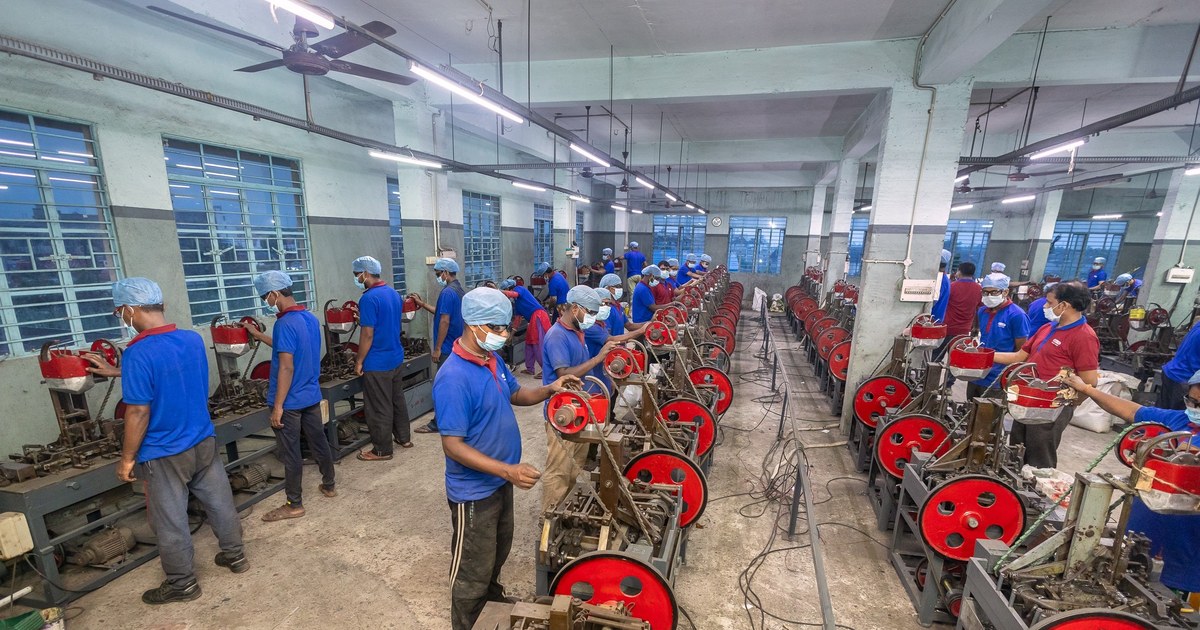
Canadian garment and uniform makers, dry cleaners and laundries, craft and haberdashery wholesalers, office-supply distributors and retail brands all buy safety pins in volume. India is a practical source: you can buy directly from a manufacturer, ship by sea from Kolkata to either coast of Canada, and use a Canadian customs broker to clear the goods.
This guide is for Canadian importers, distributors and manufacturers buying safety pins from India. It covers the tariff item and duty in the Canadian Customs Tariff, GST, what you need to set up with the Canada Border Services Agency (CBSA), documents, shipping routes, and what to put in your enquiry.
This is general information, not a customs ruling or tax advice. Tariff and procedure facts were read on official CBSA and Government of Canada publications on 19 November 2026 and can change when the Customs Tariff is amended. Confirm the classification, the rates for your import date and the documents with your licensed Canadian customs broker before you order. Product details are from Suvik Overseas product pages and its published shipping policy.
The short answer
Tariff item: steel safety pins fall under heading 73.19, subheading 7319.40 ("Safety pins and other pins"). The general tariff item for ordinary safety pins is 7319.40.90.00 ("Other"). A separate item, 7319.40.10, covers pins specially designed for marking systems.
Duty for goods from India: the Customs Tariff 2026 (version T2026-2, in force from 1 September 2026) lists 7319.40.90.00 at 7% under the Most-Favoured-Nation (MFN) tariff. The CBSA's list of countries shows India as eligible for the MFN tariff only, not for the General Preferential Tariff (GPT) or any free trade agreement tariff, so the 7% MFN rate is the one to plan on.
Steel surtax: Canada's 25% Steel Derivative Goods Surtax Order lists specific tariff items. Heading 73.19 is not on that list, as read on 19 November 2026.
GST: the CBSA charges the 5% Goods and Services Tax on the value for duty plus the duty. Ask your broker how provincial sales tax or HST applies in your province.
Set-up: every commercial importer needs a business number with an import program account and a CARM Client Portal account. Non-resident importers get their business number from the Canada Revenue Agency first.
Shipping: Suvik Overseas ships from Kolkata (INKOL) by sea or Kolkata Airport (CCU) by air, usually on FOB Kolkata or CIF terms to your port. DDP can be arranged on request.
First step: send your sizes, pack format, quantities and destination through the enquiry form, and ask for samples at the same time.
Who in Canada buys safety pins from India
Garment, uniform and workwear makers, who use pins for tagging, holding folds and packing.
Dry cleaners, laundries and textile-rental companies, who use large volumes of tagging pins.
Craft, sewing and haberdashery wholesalers supplying shops and online sellers.
Office-supply and general-merchandise distributors.
Retail brands and private-label sellers, who want pins in pouches or boxes under their own name.
Factories and laundries usually want loose pins in bulk boxes, wholesalers want boxes of pouches, and retail brands want private-label packs. Our global markets page gives an overview of the regions Suvik supplies; this article is the step-by-step process for Canada.
Tariff item and duty in Canada
The tariff item
Canada uses the Harmonized System: the first six digits are international, and the last four are Canadian. In the Customs Tariff, heading 73.19 covers sewing needles, knitting needles and similar articles of iron or steel, and "safety pins and other pins of iron or steel, not elsewhere specified or included". Subheading 7319.40 then splits into:
7319.40.10.00: safety pins and other pins "specially designed for marking systems". This item is duty-free under the MFN tariff.
7319.40.90.00: safety pins and other pins, "Other". This is the general item for ordinary steel safety pins with nickel plating, such as the AROMI, LIBERAL, SALASAR and MAJOR series.
Don't assume the marking-systems item applies just because your customers use pins to attach tags. The wording is narrow, so ask your broker, or ask the CBSA for an advance ruling through the CARM Client Portal if the difference matters to your costing. Brass pins are a copper alloy, not iron or steel, so ask your broker how to classify brass lines before declaring them with steel pins.
The duty rate
For 7319.40.90.00 in T2026-2, the MFN rate is 7%, the GPT rate is 3%, and goods qualifying under Canada's free trade agreements (for example CUSMA, CETA, CPTPP and the UK agreement) are free.
The preferential rates depend on the country of origin. The CBSA's "List of countries and applicable tariff treatments" for T2026-2 marks India "yes" for MFN and "no" for GPT and LDCT, and the list shows no free trade agreement tariff for India. So for Indian-origin safety pins, plan on 7% MFN and ask your broker to confirm it for your import date.
Surtaxes
Canada has added surtaxes on some steel goods in recent years. The Steel Derivative Goods Surtax Order (SOR/2025-267), in force since 26 December 2025, charges 25% of the value for duty on goods classified under the tariff items in its schedule. The schedule as published on the Justice Laws website (current to 29 October 2026) lists items from headings 73.08, 73.12 to 73.15, 73.17, 73.18 and 73.20, but no item from heading 73.19. Surtax lists can change quickly, so ask your broker to check every new order against the current surtax orders and customs notices.
GST and other taxes
The CBSA lists the costs a commercial import may carry: customs duty, excise duties and taxes on specific goods, the GST, and any surtax or safeguard measure. GST is calculated on the total of the value for duty and the duty. The CBSA's worked example uses 5% GST:
Convert the invoice value to Canadian dollars to get the value for duty.
Duty = value for duty × duty rate.
Value for tax = value for duty + duty.
GST = value for tax × 5%.
The CBSA says the exchange rate is the one for the date the goods began their direct, uninterrupted journey to Canada, and the value for duty must be declared in Canadian dollars. Provincial sales taxes work differently in each province, so ask your broker how they apply to you.
A simple way to estimate landed cost
The price you pay Suvik (FOB Kolkata or CIF to your port).
Ocean or air freight and insurance, if they are not in the price.
Duty at 7% of the value for duty, unless your broker confirms otherwise. Ask your broker which costs go into the value for duty under the CBSA valuation rules.
GST at 5% on the value for duty plus duty.
Brokerage fees, port, terminal and handling charges, and delivery to your warehouse.
The CARM Client Portal's Duties and Taxes Calculator gives an estimate before you import.
Setting up your business to import
The CBSA's guide to importing commercial goods says that every commercial importer needs:
an account in the CBSA Assessment and Revenue Management (CARM) Client Portal;
a 9-digit business number (BN9);
a 6-character import program (RM) account, which combines with the BN9 into a 15-character importer number (BN15).
Non-resident importers must contact the Canada Revenue Agency to get their business number before registering in CARM, because the BN9 registration inside the portal is only for Canadian resident businesses. This matters for foreign sellers acting as importer of record, for example under DDP.
Using a customs broker
You can file your own declarations, but most first-time importers use a licensed customs broker. The CBSA notes that broker fees are not regulated and that you delegate authority to your broker in the CARM Client Portal. The importer of record stays responsible for duties, taxes and records.
Release Prior to Payment
Most commercial importers use Release Prior to Payment (RPP). Under RPP, goods are released before duties and taxes are paid, provided you submit the commercial accounting declaration (CAD) and pay on time. You enrol in CARM and post financial security. Without RPP, you need a paper Type C declaration and you pay at a CBSA office before release.
Shipping, reporting and release
Reporting: all commercial goods must be reported to the CBSA when they arrive. The carrier sends Advance Commercial Information or eManifest data before arrival, and the importer has to give the carrier enough cargo detail to report the goods correctly. Use the same product description on every document.
Release: most shipments are released at the CBSA office where they first arrive in Canada. With a bonded carrier you may be able to clear at an inland location closer to your warehouse.
Examination: the CBSA can examine goods to check that the description, value, quantity and markings match the invoice. Importers and carriers pay the costs of an examination.
Ports and routes
Sea freight from Kolkata reaches Canada through the west coast ports, such as Vancouver and Prince Rupert, or eastern ports such as Halifax and Montreal. Inland cities such as Toronto, Calgary or Winnipeg are usually served by rail from a port. Ask your forwarder for the routing and transit time to your city, because many services tranship and schedules change. Air freight suits samples and urgent top-up orders.
Choosing the Incoterm:
FOB Kolkata suits you if you already have a forwarder bringing goods from India. Suvik's policy says buyers may nominate their own forwarder.
CIF to your Canadian port suits a first order, when you want one price to the port and the supplier arranges freight and insurance.
DDP can be arranged on request. Under DDP the seller carries Canadian duty and taxes, so agree in writing who is the importer of record, who holds the business number and CARM account, and who pays the broker.
Our guide to FOB, CIF and DDP for safety pins explains the risk and cost split for each, and LCL, FCL or air freight for bulk safety pins helps you choose the mode. A trial of a few cartons can go by air or LCL, and regular orders as LCL or a full container.
Documents for a Canada shipment
For a Type C release, the CBSA asks for copies of the cargo control document from the carrier and the Canada Customs Invoice (form CI1) or a commercial invoice containing the same information. The CBSA guide also says the seller's invoice must include a complete description of the goods, the selling price and the terms of sale. Your broker uses these to build the declaration.
Suvik's shipping policy lists the commercial invoice, packing list, bill of lading or airway bill, certificate of origin and GST/IGST documents as standard, plus country-specific certificates as required. For Canada, ask for:
a commercial invoice with the full description (material, finish, length in mm, pack format), the quantity in pieces and boxes, the unit price, the Incoterm and the currency;
a packing list matching the carton marks;
the bill of lading or airway bill;
a certificate of origin, if your broker wants one for the file. India has no preferential tariff with Canada, so this is for proof of origin, not a reduced rate.
For more on each document, see export documents for safety pin orders.
Marking and labelling
The CBSA says that some imported goods must be clearly marked with their country of origin. CBSA Memorandum D11-3-1 lists the classes of goods that need marking in its Schedule I. As read on 19 November 2026, ordinary safety pins are not named there (souvenir pins and brooches are, under "novelties"). Your broker can confirm this; many retail buyers want "Made in India" on the pack anyway.
Packs sold to consumers in Canada also have to meet Canada's consumer packaging and labelling rules, including bilingual English and French text. We cover those rules in a separate guide to bilingual labels for safety pin packs sold in Canada. Agree the label text before production if you're ordering private-label packs.
Choosing the product
Here is what Suvik's product pages listed when checked on 18 November 2026. Every item below is mild steel with nickel plating unless marked brass.
Size 0, 28–30 mm, 0.70 mm wire: the general-purpose size for tagging and light fabric. Available as LIBERAL loose size 0 (28 mm, 1,000 pieces per box, 100 boxes per carton) or AROMI size 0 (30 mm, 1,000 pieces per box in 10 pouches of 100, 100 boxes per carton; also in 20- and 40-pouch boxes).
Sizes 1 and 2, 35–40 mm, 0.80–0.90 mm wire: for thicker fabric, for example AROMI, MAJOR or SALASAR size 2 at 40 mm.
Assorted boxes (sizes 0, 1 and 2): for wholesalers selling to shops and crafters, for example SALASAR assorted, 50 pouch (30, 35 and 40 mm; 1,000 pieces in 50 pouches of 20; 75 boxes per carton).
Size 4, 53 mm, 1.02–1.10 mm wire: for heavy fabric, laundry tags and uniforms, for example LIBERAL size 4 (53 mm, 1.02 mm wire, 300 pieces per box in 30 bunches of 10, 60 boxes per carton).
Brass sizes 000 and 00, 19 mm and 23 mm: small pins for fine fabric and finishing, in silver, gold, black and nickel-free finishes, 1,000 pieces per packet, for example brass size 00 nickel-free (23 mm, 0.67 mm wire).
Size numbers differ between manufacturers (a "size 0" can be 28 mm or 30 mm), so write the length in millimetres on your purchase order. Our guide to what safety pin size numbers mean in millimetres explains this, and what gauge is a safety pin covers wire thickness. Laundries should also read safety pins for industrial laundry and textile rental.
The catalogue page has downloadable catalogues for the AROMI, LIBERAL, SALASAR, MAJOR and loose safety pin ranges.
Buying direct from the factory
Suvik Overseas Pvt. Ltd. is a manufacturer of safety pins and dress hooks, incorporated in 2006 and registered as an MSME manufacturing enterprise, with its registered office in Kolkata and its factory at Chamrail, Howrah, West Bengal. Buying from the manufacturer means you discuss sizes, finishes, pack counts, carton marks and labels directly with the people close to production. To get a price, use the quote request form with your sizes, pack format and your Canadian city as the destination.
Samples, minimums, lead times and payment
Samples: available on request; cost and lead time are shared on enquiry. See samples, quality and packing. Test the closing, the point, the finish and the pack counts before you commit; the sample evaluation checklist gives a method.
Minimums: discussed per order, depending on product and packaging. See the MOQ guide.
Lead times: the published policy gives 3–5 business days for ready stock after payment confirmation, 10–21 business days for made-to-order or custom packaging, and 15–30 business days for large FCL/LCL export consignments, including stuffing and documentation. Peak season (October–January) can extend these, and the sea passage comes on top. See lead time by order size.
Payment: orders are processed after a confirmed purchase order and advance payment as agreed. Our guide to payment terms for safety pin imports compares advance payment, documentary collection and letters of credit.
What to put in your enquiry
A complete enquiry gets a quotation you can use. Include:
Your company name, province and city, and whether you're a manufacturer, laundry, wholesaler or retail brand.
Products: material, finish, size number and length in mm.
Pack format: loose bulk, pouches in a box, assorted box or private label.
Quantity per line, and how often you expect to reorder.
Incoterm (FOB Kolkata, CIF to your port, or DDP) and the final delivery city.
Who will be the importer of record, and your broker's name if you have one.
Any carton marks, "Made in India" marking or bilingual label text you need.
Whether you want samples first.
Our RFQ template gives a fuller format.
Common mistakes
Using the wrong tariff item. "Marking systems" pins (7319.40.10) are a narrow category; most safety pins go under 7319.40.90.
Expecting a preferential rate. India is not a GPT beneficiary in the 2026 Customs Tariff, and the CBSA list shows no trade agreement tariff for India.
Not registering in CARM in time. Set up your business number, RM account and broker delegation before the goods ship.
Forgetting labels. Retail packs need their label text agreed before production.
Frequently asked questions
What is the import duty on safety pins from India to Canada?
Ordinary steel safety pins are usually classified under tariff item 7319.40.90.00, which carries a 7% MFN rate in the 2026 Customs Tariff. Goods from India get the MFN rate, and GST at 5% is charged on the value plus duty. Your broker confirms the final amount.
Can a company outside Canada be the importer?
Yes. Non-resident importers first get a business number from the Canada Revenue Agency, then register in CARM. Agree this in writing if you buy on DDP terms.
Does the same apply to the USA?
No. The USA has its own tariff schedule, duties and marking rules. See our landed cost example for the USA. For other regions, see our guides for Kenya and Vietnam, and the general guide to importing safety pins from India.
Next step
If you import or use safety pins in Canada, send your sizes, pack format, quantities, Incoterm and destination through the enquiry form or the contact page. Tell us who will be the importer of record and whether you need retail labelling, and ask for samples at the same time so you can test the pins while the quotation is prepared. Minimums are discussed per order.
Sources
CBSA, Customs Tariff 2026 (T2026-2, effective 1 September 2026), Chapter 73: 7319.40.10.00 (marking systems) Free; 7319.40.90.00 MFN 7%, GPT 3%, FTA treatments Free. Read 19 November 2026.
CBSA, Customs Tariff 2026-2: List of countries and applicable tariff treatments: India MFN yes, GPT no, LDCT no. Read 19 November 2026.
Steel Derivative Goods Surtax Order, SOR/2025-267 (Justice Laws, current to 29 October 2026): 25% surtax on scheduled tariff items; no 73.19 item in the schedule. Read 19 November 2026.
CBSA, Guide to importing commercial goods into Canada: duties and taxes: tariff classification, MFN and preferential tariffs, GST, surtax, value for duty, worked example with 5% GST, exchange rate. Read 19 November 2026.
CBSA, Set up your business to import: CARM, BN9, RM account, BN15, non-resident importers, customs brokers, RPP. Read 19 November 2026.
CBSA, Ship and report goods and Release, account and pay: reporting, ACI/eManifest, release office, examination, RPP, Type C CAD documents. Read 19 November 2026.
CBSA Memorandum D11-3-1, Marking of Imported Goods: Schedule I classes of goods requiring country-of-origin marking. Read 19 November 2026.
Suvik Overseas, Shipping & Delivery Policy: Incoterms, ports of loading, documents, lead times and packing. Read 19 November 2026.
Suvik Overseas product pages linked above: lengths, wire thicknesses, materials, finishes, pack counts and carton quantities. Read 18 November 2026.