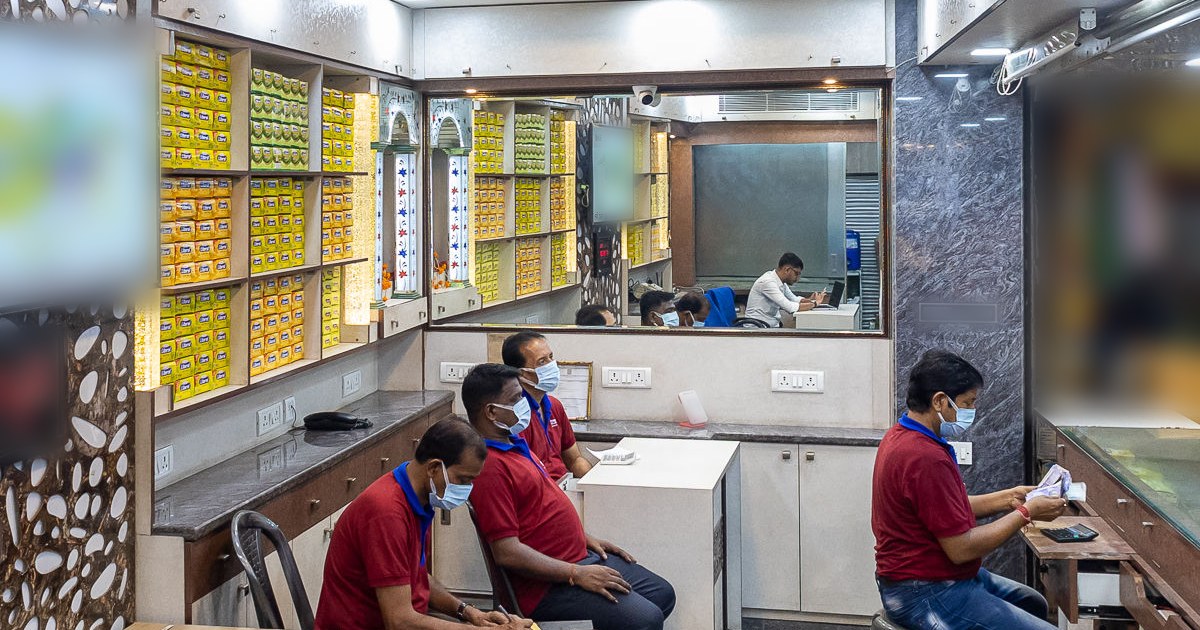
Bangladesh's garment export factories use safety pins daily for tagging, folding and packing, and accessories wholesalers sell them to tailors and shops. India is a practical source: you can buy directly from a manufacturer in Kolkata and bring the goods in by sea through Chattogram or by road through Benapole.
Most Bangladeshi imports are paid by letter of credit (LC), and the rules depend on who is buying: a trader paying duty, or an export-oriented garment factory importing duty-free under a bond licence. This guide covers both, plus the tariff for HS 7319.40, the port choice, documents and what to put in your enquiry.
This is general information, not a customs ruling, tax or banking advice. Procedure and tariff facts were read on official National Board of Revenue (NBR), Bangladesh Customs, Bangladesh Bank, Customs Bond Commissionerate, BEPZA and port authority publications on 20 November 2026. Bangladesh changes duty rates every budget and banks follow Bangladesh Bank circulars, so confirm the classification, the duty and taxes for your arrival date and your LC terms with your C&F agent and your bank before you order. Product details are from Suvik Overseas product pages and its published shipping policy.
The short answer
Tariff line: steel safety pins are 7319.40.00 ("Safety pins and other pins") in the Bangladesh Customs Tariff, written 73194000 in the operative tariff.
Customs duty: NBR's Chapter 73 schedule sets a statutory customs duty of 25%. VAT, regulatory duty and advance taxes are added at import, so get the full figure from your C&F agent.
Who can import: importers registered with the Chief Controller of Imports and Exports (CCI&E), with the correct HS code on the LC Authorisation Form (LCAF) and the LC.
Payment: a documentary LC calling for signed invoices and a certificate of origin.
Garment exporters: bonded factories can open a back-to-back LC and clear the pins duty-free if they're covered by the factory's Utilization Declaration (UD).
Ports: Chattogram by sea, or the Petrapole–Benapole road crossing from West Bengal.
First step: send your sizes, pack format, quantities and port through the enquiry form, and ask for samples at the same time.
Who in Bangladesh buys safety pins from India
RMG export factories, for tagging, folding and packing garments.
Accessories wholesalers and traders supplying tailors and shops.
Buying houses and accessories suppliers working for brands.
Factories usually want loose pins in bulk boxes, traders want boxes of pouches, and suppliers to brands often need private-label packs. If you prefer to read in Bengali, our page for garment export factories in Bangladesh introduces what we supply. This article is the English guide to the import process itself.
Two ways to import: duty-paid or under bond
Duty-paid import. A trader or a factory selling into the home market opens an import LC and pays duty and taxes at clearance.
Bonded import. A 100% export-oriented garment factory with a bond licence imports the pins as an input for garments it will export, without paying duty. Factories in an Export Processing Zone (EPZ) follow BEPZA's import permit procedure.
The LC type and paperwork differ, so tell your supplier which route you're using.
Step 1: Register and choose your bank
Bangladesh Bank's Guidelines for Foreign Exchange Transactions (GFET, 2018, Volume 1, Chapter 7) set out the ground rules banks follow for imports:
Imports are regulated by the Ministry of Commerce through the Import Policy Order (IPO) in force and public notices from the CCI&E.
Under the Importers, Exporters and Indentors (Registration) Order 1981, no one can import unless registered with the CCI&E or exempted. Your bank checks this first.
Banks open LCs only for known customers with an account, and report every import to Bangladesh Bank's Online Import Monitoring System.
The correct HS code is mandatory in the LCAF and the LC or purchase contract. Wrong codes can lead to customs penalties.
Step 2: Pro forma invoice, LCAF and the LC
The order of events
Get a pro forma invoice with a full description, size in millimetres, pack format, quantity, unit price, Incoterm and port of entry.
Your bank issues the LCAF, which authorises the foreign exchange. The GFET says it's valid for remittances for one year after the month of issue.
Your bank opens the LC, only against a firm contract, with the full description and unit price. LCs above USD 5,000 go by SWIFT.
The supplier ships and presents documents; you pay or accept the bill and collect them for clearance.
Above USD 10,000 against a supplier's own pro forma invoice, your bank must also get a credit report on the supplier.
What the LC must say
The GFET says every import LC into Bangladesh must:
be a documentary LC, not a clean or revolving one;
pay against a full set of shipped on board bills of lading, air waybills, truck receipts, railway receipts or courier receipts showing despatch to a destination in Bangladesh;
call for signed invoices and a certificate of origin.
For land-port imports, the LC or purchase contract must name only one land port of entry, and the bank sends copies of the LC to that land port.
Sight or usance
The GFET allows usance of up to 180 days for industrial raw materials imported by industrial importers for their own use, including back-to-back imports. Agree sight or usance with your supplier before you open the LC.
Incoterms
The GFET says imports are usually made on a CFR or CPT basis, with separate rules for FOB. Suvik usually quotes FOB Kolkata or CIF destination port and can arrange DDP on request, so ask for the term your bank prefers. Our guide to FOB, CIF and DDP for safety pins explains who pays for what. For a wider comparison of advance payment, documentary collection and LCs, see payment terms for safety pin imports.
Bonded imports for RMG exporters
The back-to-back LC
Bangladesh Bank allows back-to-back (BTB) import LCs only for export-oriented units under the bonded warehouse system. The GFET says:
The factory must hold a valid CCI&E registration and a valid bonded warehouse licence.
The BTB LC is opened against a master export LC, and its value can't exceed the permitted percentage of the master LC's net FOB value.
BTB LCs are opened on a usance basis of up to 180 days.
The bank pays at maturity out of the export proceeds, after it has seen the bill of entry for bond proving the goods have arrived.
A BTB LC means the supplier is paid at maturity, so agree the usance period with the price.
The Utilization Declaration
A bonded factory must also show that its imported inputs match the garments it will export. A World Bank assessment published on the Customs Bond Commissionerate website describes the process:
The factory submits a Utilization Declaration application, in effect its bill of materials for an export order, to BGMEA or BKMEA with the master LC, back-to-back LC, pro forma invoices and packing instructions.
The association checks it and issues the Utilization Declaration (UD).
Each import under the bond is recorded in passbooks kept by the factory and customs.
The assessment dates from 2015 and parts of the process are now automated. In practice, make sure safety pins (HS 7319.40), with the quantity and description on your pro forma invoice, appear in the UD before shipment.
Accessories makers and the Utilization Permission
Accessories and packaging makers who supply garment exporters ("deemed exporters") use the Customs Bond Commissionerate's Utilization Permission (UP). The Ministry of Commerce's Bangladesh Trade Portal says it's issued fresh for each valid UD and needs a back-to-back LC (or sales contract or import permit), the pro forma invoice, the UD and the master LC. The published time limit is one to two days, with no fee.
EPZ factories
BEPZA lists duty-free import of raw materials among its incentives for EPZ investors, with automated import permits. The Chittagong EPZ citizen's charter lists the IP form, a signed undertaking, the commercial invoice, packing list and transport document. If your factory is in an EPZ, tell your supplier so the documents are addressed correctly.
Tariff, duty and taxes for HS 7319.40
Classification
Heading 73.19 covers needles and safety pins of iron or steel, so plated steel safety pins go under 7319.40.00. Brass pins are a copper alloy, not iron or steel, so ask your C&F agent how to classify brass lines before you open the LC.
Customs duty
The Chapter 73 schedule on NBR's tariff schedule page (file dated June 2026) gives a statutory customs duty of 25% on import of 7319.40.00, and "Free" on export.
The other import-stage taxes
Other duties and taxes are added at the import stage. For 73194000, the FY 2025-26 operative tariff published by Bangladesh Customs listed customs duty 25%, supplementary duty 0%, VAT 15%, advance income tax 5%, advance tax 5% and regulatory duty 3%, a total tax incidence of 58.40%.
NBR's FY 2026-27 budget summary says goods carrying 3% regulatory duty now carry 5%, so that figure has changed this fiscal year. We couldn't open the live FY 2026-27 operative tariff today, so we don't state a current total. Ask your C&F agent for the full assessment for your arrival date.
SAFTA preference
India and Bangladesh are both members of the South Asian Free Trade Area (SAFTA). Under SAFTA, tariff cuts cover all lines except each country's sensitive list. Subheading 7319.40 doesn't appear on Bangladesh's revised Phase-II sensitive list for non-LDC members such as India, published by the High Commission of India in Dhaka. So Indian-made safety pins may qualify for a preferential rate.
We couldn't confirm the current SAFTA rate or the latest list from Bangladesh Customs today, so ask your C&F agent whether the preference applies. To claim it you need a SAFTA certificate of origin issued in India; for India-made goods the rules of origin use a change of tariff heading plus 40% value content. Our guide to certificates of origin and FTA duty explains how to ask for the right certificate.
Chattogram sea port or Benapole land port
Chattogram
Chattogram is Bangladesh's main seaport. A Ministry of Finance performance report for 2023-24 says the Chittagong Port Authority handles over 92% of the country's sea-borne trade. It suits full containers and LCL consolidations, and your LC calls for a shipped on board bill of lading.
Benapole
Benapole land port, in the Sharsha upazila of Jashore district, is described by the Bangladesh Land Port Authority as the country's largest and most important land port. Across the border is the Indian integrated check post at Petrapole, in Bongaon, North 24 Parganas, West Bengal.
It suits truck shipments from West Bengal. Name Benapole as the only land port of entry in the LC, as the GFET requires, and call for a truck receipt rather than a bill of lading.
How to decide
Compare the total cost and time from each entry point to your factory with your C&F agent, and for bonded goods check with your bond officer which entry point they handle. Air freight suits samples and urgent top-ups. See LCL, FCL or air freight for bulk safety pins.
Suvik's published shipping policy lists Kolkata (INKOL) as the sea port of loading and Kolkata Airport (CCU) for air freight, and says buyers may nominate their own forwarder. If you want the goods to travel by road through Petrapole and Benapole, say so in your enquiry so the quotation and documents are prepared for that route.
Documents for a Bangladesh shipment
Suvik's shipping policy lists the commercial invoice, packing list, bill of lading or airway bill, certificate of origin and GST/IGST documents as standard, plus country-specific certificates as required. For Bangladesh, line these up with your LC:
a signed commercial invoice with the HS code, description and unit price matching the LC;
a packing list with carton counts, weights and marks;
a shipped on board bill of lading (Chattogram) or truck receipt (Benapole);
a SAFTA certificate of origin if you're claiming the preference;
for bonded imports, the UD or UP reference and master LC number if your bank asks for them.
Import duties, taxes and clearance charges are the buyer's responsibility under the policy. See export documents for safety pin orders, and put the LC number, HS code and port of entry in your purchase order clauses so the documents match from the start.
Choosing the product
Here is what Suvik's product pages listed when checked on 20 November 2026. Every item below is mild steel with nickel plating unless marked brass.
Size 0, 28–30 mm, 0.70 mm wire: the general size for tagging and light fabric. Available as LIBERAL loose size 0 (28 mm, 1,000 pieces per box, 100 boxes per carton) or AROMI size 0 (30 mm, 1,000 pieces per box in 10 pouches of 100, 100 boxes per carton).
Assorted boxes (sizes 0, 1 and 2): for accessories traders, for example SALASAR assorted, 50 pouch (30, 35 and 40 mm with 0.70, 0.80 and 0.90 mm wire; 1,000 pieces in 50 pouches of 20; 75 boxes per carton).
Size 4, 53 mm, 1.02 mm wire: for heavy fabric, for example LIBERAL size 4 (300 pieces per box in 30 bunches of 10, 60 boxes per carton).
Brass size 00, 23 mm, 0.67 mm wire: small pins for fine fabric, for example brass size 00 nickel-free (nickel-free silver finish, 1,000 pieces per packet). Brass pins also come in black.
Size numbers differ between manufacturers, so write the length in millimetres on your pro forma invoice, LC and UD. See what safety pin size numbers mean in millimetres and what gauge a safety pin is. Garment factories should also read safety pins for garment manufacturers. The catalogue page has downloadable catalogues for each range.
Buying direct from the factory
Suvik Overseas Pvt. Ltd. is a manufacturer of safety pins and dress hooks, incorporated in 2006 and registered as an MSME manufacturing enterprise. Its registered office is in Kolkata and its factory is at Chamrail, Howrah, West Bengal. Buying from the manufacturer means you agree sizes, pack counts, carton marks and LC documents directly with production. To get a price, use the quote request form with your sizes, pack format, Incoterm and port of entry.
Samples, minimums and lead times
Samples: available on request; cost and lead time are shared on enquiry. See samples, quality and packing and the sample evaluation checklist.
Minimums: discussed per order, depending on product and packaging. See the MOQ guide.
Lead times: the published policy gives 3–5 business days for ready stock after payment confirmation, 10–21 business days for made-to-order or custom packaging, and 15–30 business days for large FCL/LCL export consignments, including stuffing and documentation. Peak season (October–January) can extend these, and the LC and transit come on top. See lead time by order size.
Payment: the policy says orders are processed after a confirmed purchase order and advance payment as agreed. If you'll pay by LC or BTB LC, agree that in the quotation.
What to put in your enquiry
Your company name, city, and whether you're an RMG factory, accessories maker, trader or buying house.
Products: material, finish, size number and length in mm.
Pack format: loose bulk, pouches in a box, assorted box or private label.
Quantity per line, and how often you expect to reorder.
Route: duty-paid import, bonded import (BTB LC) or EPZ.
Terms (CFR, CIF or FOB Kolkata) and the port of entry: Chattogram, Benapole or Dhaka by air.
Payment: LC at sight or usance, and the number of days.
Whether you need a SAFTA certificate of origin.
Whether you want samples first.
Our RFQ template gives a fuller format.
Common mistakes
A wrong or missing HS code on the LCAF or LC. The GFET makes the correct code mandatory.
Naming two land ports. An LC for a land-port import must name only one.
Pins left off the UD. A bonded factory can't clear duty-free pins that aren't covered by its Utilization Declaration.
Mismatched descriptions across the pro forma invoice, LC, UD and invoice. Use the same wording, size in mm and quantity.
Costing on customs duty alone. VAT, regulatory duty and advance taxes are added at import.
Frequently asked questions
What is the import duty on safety pins in Bangladesh?
NBR's Chapter 73 schedule sets a statutory customs duty of 25% on 7319.40.00. VAT, regulatory duty and advance taxes are added at import. Get the full figure for your arrival date from your C&F agent.
Can garment exporters import safety pins duty-free?
Yes, if the factory works under a bond licence and the pins are covered by its Utilization Declaration for the export order. The import is usually paid by a back-to-back LC against the master export LC.
Does the same apply to other countries?
No. Each market has its own rules. See our guides to Nigeria, Canada, Kenya and Vietnam, and our article on safety pins for garment exporters in the Philippines. For general steps, see the guide to importing safety pins from India.
Next step
If you import or use safety pins in Bangladesh, send your sizes, pack format, quantities, route and port of entry through the enquiry form or the contact page. Say whether you'll pay by LC or back-to-back LC and whether you need a SAFTA certificate of origin, and ask for samples at the same time so you can test the pins while the quotation is prepared. Minimums are discussed per order.
Sources
National Board of Revenue, Bangladesh Customs Tariff, First Schedule, Chapter 73 (file dated June 2026): 7319.40.00 "Safety pins and other pins", statistical unit kg, statutory customs duty on import 25%, on export Free. Read 20 November 2026.
Bangladesh Customs, Customs Tariff, Fiscal Year 2025-2026 (operative tariff PDF dated 2 June 2025, customs.gov.bd): 73194000 CD 25, SD 0, VAT 15, AIT 5, AT 5, RD 3, TTI 58.40. Read 20 November 2026.
National Board of Revenue, Budget FY 2026-27: CD, SD and RD rate restructure: goods with 3% regulatory duty moved to 5%. Read 20 November 2026.
Bangladesh Bank, Guidelines for Foreign Exchange Transactions 2018, Vol. 1, Chapter 7, Section I: Imports: IPO and CCI&E, importer registration, Online Import Monitoring System, CFR/CPT terms, correct HS code, LCAF validity. Read 20 November 2026.
Bangladesh Bank, GFET 2018, Vol. 1, Chapter 7, Section II: Letters of Credit and Remittances against Imports: documentary LCs, transport documents, signed invoices and certificates of origin, one land port per LC, SWIFT above USD 5,000, firm contracts, credit reports, 180-day usance for industrial raw materials. Read 20 November 2026.
Bangladesh Bank, GFET 2018, Vol. 1, Chapter 7, Section III: Back to Back LCs: bonded units only, CCI&E registration and bond licence, net FOB limit, usance up to 180 days, payment at maturity against bill of entry for bond. Read 20 November 2026.
Bangladesh Trade Portal (Ministry of Commerce), Utilization Permission (UP): issuing office, required documents, steps, USD 80,000 threshold, 1–2 days, no fee. Read 20 November 2026.
World Bank, Bangladesh Bond Warehouse Regime: Assessment and Recommendations (2015), published by the Customs Bond Commissionerate: duty-free imports under bond, Utilization Declaration issued by BGMEA or BKMEA, passbooks, deemed exporters. Read 20 November 2026.
BEPZA, Why BEPZA: duty-free import of raw materials, automated import permits. BEPZA, Chittagong EPZ citizen's charter (Commercial Operation Department): import permit documents. Read 20 November 2026.
Ministry of Finance, Independent Performance Evaluation Report on Chittagong Port Authority for 2023-24: main seaport, over 92% of sea-borne trade. Read 20 November 2026.
Bangladesh Land Port Authority, Benapole Land Port website (benapole.blpa.gov.bd): location in Sharsha, Jashore, largest land port, Petrapole ICP opposite (brief history and location pages). Read 20 November 2026.
Department of Commerce, India, Agreement on SAFTA: trade liberalisation programme, sensitive lists, rules of origin (change of tariff heading and 40% value content for non-LDCs). Read 20 November 2026.
High Commission of India, Dhaka, Revised Sensitive List (Phase-II) of Bangladesh for Non-LDCs under SAFTA: 7319.40 not listed. Read 20 November 2026.
Suvik Overseas, Shipping & Delivery Policy: Incoterms, ports of loading, documents, lead times, packing, buyer's responsibility for import duties. Read 20 November 2026.
Suvik Overseas product pages linked above: lengths, wire thicknesses, materials, finishes, pack counts and carton quantities. Read 20 November 2026.